
Plants
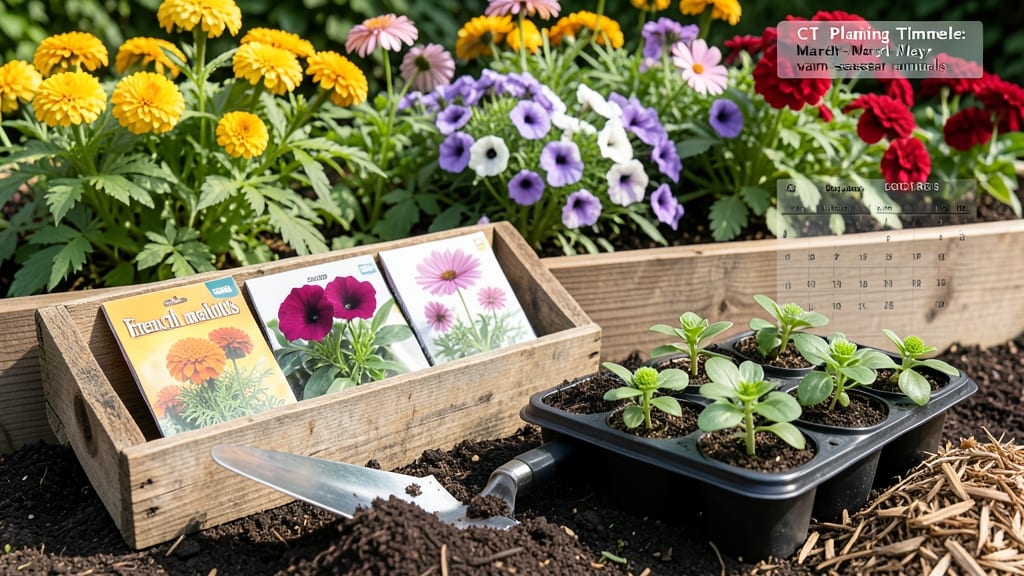
Planting annuals in Connecticut at the wrong time can mean the difference between a vibrant garden and a sad, wilted disappointment. With frost dates that shift yearly and microclimates across the state, figuring out the perfect window feels like solving a puzzle.
Most gardeners in zones 5b-6b wait until mid-April to late May for their first planting, but that’s just the start. Warm-season 🌸 annuals like marigolds and zinnias need soil that’s warmed to at least 50°F, while cool-season varieties can handle earlier planting.
Missing this window by even a few weeks could stunt growth or invite pests.
Here’s the game-changer: a two-phase planting strategy that works for Connecticut’s climate. First, we’ll tackle the spring window—when to prep soil, which annuals thrive earliest, and how to protect young plants from late frosts. Then, we’ll cover the second chance in late July to early August for fall blooms.
Whether you’re filling containers or garden beds, I’ll walk you through the exact weeks before last frost for best results, plus how to adjust for your specific corner of CT—whether you’re near the coast or inland. Let’s get those annuals growing strong!
Connecticut’s last frost dates and ideal weeks before planting annuals
Connecticut’s USDA zones 5b-6b mean gardeners must time annual plantings carefully to avoid late spring frosts or early fall chills. The state’s average last frost date ranges from mid-April (coastal areas) to early May (inland valleys), while the first frost typically arrives by mid-October.
These dates create a 165-day frost-free window, perfect for planning two planting seasons: spring and fall.
For warm-season annuals like marigolds, zinnias, and tomatoes, wait until 2-3 weeks after your region’s last frost date. These heat-lovers need soil temperatures above 50°F to thrive.
In contrast, cool-season annuals such as pansies, snapdragons, and sweet alyssum can handle cooler temperatures and should be planted 4-6 weeks before the last frost for early blooms.
Here’s how to use these timelines in practice: If your last frost date is April 20, plant cool-season annuals by March 15 and warm-season annuals by May 10.
For fall blooms, aim to plant heat-loving annuals by July 15 to ensure they mature before frost. Always check NOAA’s frost predictions or local weather reports for adjustments.
| Region | Avg. Last Frost | Cool-Season Planting Window | Warm-Season Planting Window |
|---|---|---|---|
| Coastal (New Haven, Stamford) | Mid-April | March 15–April 15 | May 1–May 15 |
| Inland Valleys (Hartford, New Britain) | Early May | March 20–April 20 | May 15–May 30 |
| High Elevation (Litchfield Hills) | Late April–Early May | March 25–April 25 | May 20–June 1 |
| Fall Planting (All Regions) | N/A | July 15–August 15 (for cool-season) | July 1–July 15 (for warm-season) |
Pro tip: Use black plastic mulch or row covers to warm soil faster in early spring, giving you an extra 1-2 weeks to plant warm-season annuals. This is especially useful in USDA zone 5b areas where frosts linger longer.
For example, if you’re growing tomatoes or peppers, starting them indoors in late March and transplanting after the soil warms up can extend your harvest by 3-4 weeks.
Another key strategy is to stagger plantings every 2-3 weeks for a continuous bloom cycle. For instance, plant petunias in early May, then again in late May, and once more in early July.
This ensures your garden stays colorful from late spring through fall, even if some plants succumb to heat stress or pests.
Don’t forget about container gardening, which gives you more control over planting times. Containers warm up faster than garden beds, so you can plant warm-season annuals 1-2 weeks earlier in pots. Just ensure your containers have drainage holes and use lightweight potting mix to prevent overheating.
If you’re new to Connecticut gardening, start with hardy annuals like marigolds or zinnias, which tolerate a wide range of conditions. These plants are forgiving if you miss the ideal window by a few days, making them perfect for first-time gardeners or those with busy schedules.
For a foolproof approach, mark your calendar with the average last frost date for your town (check the CT Agricultural Experiment Station for local data) and plan to plant warm-season annuals 2 weeks after that date.
This simple rule reduces the risk of frost damage while maximizing your garden’s potential.
Finally, keep a planting journal to track what works best in your specific microclimate. Note any unexpected frosts or early heat waves—these records will help you refine your timing each year for even better results.
How to adjust planting timing for Connecticut’s microclimates and soil conditions
Connecticut’s diverse geography—from coastal shorelines to inland valleys—means microclimates can shift planting windows by 2-4 weeks. Coastal areas like Groton often see warmer springs than inland Hartford, while high-elevation spots like Litchfield Hills may experience later frosts.
Always check NOAA’s 7-day forecasts and local Cooperative Extension Service updates for real-time adjustments.
Soil type plays a crucial role too. Sandy soils warm up faster in spring but drain quickly, while clay soils hold moisture longer but chill slower.
Amend clay-heavy soil with compost or perlite to improve warmth retention, and use black plastic mulch to raise soil temperatures by 5-10°F in cooler microclimates.
⚠️ Warning: Avoid These Planting Pitfalls in CT
Planting too early: Frost-sensitive annuals like marigolds or geraniums will die if exposed to 32°F+ temps—even just one night can set growth back weeks. Always wait until soil temps hit 50°F for warm-season plants.
Ignoring elevation: Areas above 1,000 feet (e.g., Torrington) may have 1-2 week later frost dates. Use a minimum/maximum thermometer buried in soil to track local conditions.
Skipping cold frames: Extend your season by 3-4 weeks in spring/fall with a simple clear plastic cloche or hoop house. This is especially useful for cool-season annuals like pansies or snapdragons planted in late August.
For urban gardens (e.g., New Haven or Stamford1 week earlier than rural areas. Monitor your specific spot by planting a test crop of radishes—they’ll tell you when soil is truly warm enough for tomatoes or peppers.
Transplanting is another key strategy. Start warm-season annuals indoors 4-6 weeks before your target outdoor date, then harden them off. This gives you a 2-week buffer if late frosts strike. For fall plantings, begin seeding cosmos or zinnias indoors in early July to transplant by late July.
Pro tip: Use row covers (lightweight fabric) over newly planted annuals to protect against unexpected late frosts. Remove covers by midday to prevent overheating. Pair this with drip irrigation set to morning watering—this keeps roots cool and reduces fungal diseases like powdery mildew, common in CT’s humid summers.
Finally, keep a planting journal for 2-3 years to track your local patterns. Note when marigolds or petunias thrive in your microclimate, and adjust future schedules accordingly. With these tweaks, you’ll maximize your CT growing season from early May to late October—or even longer with smart planning! 🌱🌿