
Plants
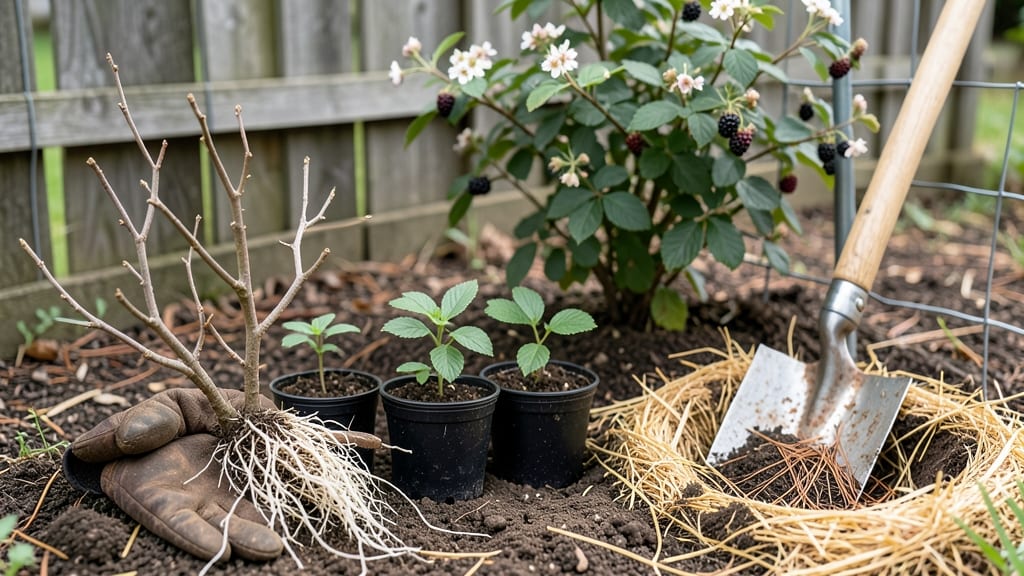
Planting blackberries in Georgia at the wrong time can turn your 🫐 dreams into a summer of wilting canes and empty vines—unless you time it just right.
The secret lies in matching your variety to Georgia’s chill-hour zones and planting when the soil warms enough to support root growth but before the brutal heat sets in.
Most gardeners in 7b-8b zones rush to plant in early spring, only to watch their canes struggle through Georgia’s unpredictable frost risks or bake under March’s heat spikes.
The ideal window? Late winter to early spring (February-March) or fall (September-October), when temperatures stabilize and roots can establish before summer’s intensity.
I’ve learned the hard way that skipping soil prep or ignoring your blackberry’s chill needs (like choosing 'Arapaho' for low-chill areas) leads to stunted growth. But with the right timing, you’ll see canes thriving by harvest season—packed with those sweet, juicy berries you’ve been dreaming of.
Let’s break down exactly when to plant, how to prep your soil, and which varieties thrive in Georgia’s unique climate—so you can avoid the mistakes that leave other gardeners scratching their heads in August.
Georgia’s chill-hour zones: how they determine blackberry planting months
Georgia’s climate ranges from USDA Zone 7b in the north to Zone 8b in the south, creating distinct chill-hour requirements for blackberries. These chill hours—measured as the number of hours below 45°F—dictate which varieties thrive in your area.
For example, northern Georgia’s 500-700 chill hours suit high-chill varieties like 'Natchez,' while southern Georgia’s 300-500 chill hours demand low-chill types like 'Arapaho' or 'Ouachita.'
Choosing the wrong variety can lead to poor fruit set or even no berries at all. Georgia’s fall and early spring planting windows align with chill-hour accumulation, ensuring canes break dormancy at the right time.
For instance, planting 'Chester' (a 500-600 chill-hour variety) in Zone 7b during late February gives roots time to establish before summer heat arrives.
Here’s how chill hours translate to planting months across Georgia:
| Chill-Hour Zone | Best Varieties | Ideal Planting Window | Key Tip |
|---|---|---|---|
| 300-500 hours (Southern GA) | Arapaho, Ouachita, Prime-Ark Freedom | September-October or February | Avoid spring planting after March 15. |
| 500-700 hours (Central GA) | Chester, Natchez, Triple Crown | Late February-March or September | Soak roots for 2-4 hours before planting. |
| 700-1,000 hours (Northern GA) | Navaho, Black Satin, Boygen | Late February-March | Mulch heavily to retain moisture. |
If you’re unsure about your chill hours, use the Georgia Climate Toolkit (available from UGA Extension) to calculate based on your ZIP code. For example, Athens (Zone 7b) averages 600 chill hours, while Savannah (Zone 8a) sees only 400 hours.
This tool also predicts last frost dates, helping you avoid planting too early.
Thornless varieties like 'Natchez' or 'Prime-Ark Freedom' are popular in Georgia because they’re easier to harvest, but they still need proper chill-hour matching.
For instance, 'Natchez' requires 500-600 chill hours, making it ideal for central Georgia but a poor choice for southern coastal areas where chill hours drop below 400.
Another critical factor is soil temperature. Blackberry roots need soil temps above 50°F to establish—planting in cool March soil can stunt growth. In Zone 7b, aim for late February planting when soil temps stabilize.
Use a soil thermometer to check before planting; roots won’t thrive if soil is still chilly.
Georgia’s fall planting window (September-October) is often overlooked but ideal for low-chill varieties. Canes planted in fall have 6-8 weeks to establish roots before winter, then break dormancy earlier in spring. For example, 'Arapaho' planted in early October in Zone 8b will produce fruit 2-3 weeks earlier than spring-planted canes.
Pro tip: If you’re in Zone 8a or warmer, prioritize everbearing varieties like 'Prime-Ark Freedom,' which produce fruit on new and old wood, giving you two harvests per year. These varieties are more forgiving with chill hours but still need 300+ hours for optimal production.
Finally, consider microclimates—even within Georgia, a hilltop might experience 100+ fewer chill hours than a valley. Observe your garden’s frost patterns for 3 years to refine your planting timeline.
For instance, Albany (Zone 8a) may have 500 chill hours in a sheltered spot but only 400 in an exposed area.
By matching your blackberry variety to your local chill hours and planting within the optimal window, you’ll set your canes up for healthy growth and abundant fruit—without the frustration of failed crops. 🫐
Step-by-Step planting timeline for Georgia’s climate: from bare-root to established canes
Georgia’s late winter and early fall planting windows offer the best chances for blackberry canes to establish roots before summer’s 90°F+ heat. For bare-root plants, aim for February through March—just as buds begin to swell but before last frost dates (typically mid-March).
Fall planting (September-October) gives canes time to root before winter dormancy, but avoid planting after October 15 to prevent root stress before cold sets in.
Your first step is soil preparation. Georgia’s clay-heavy soils need amending with 2-3 inches of compost or aged manure to improve drainage. Test your soil’s pH (5.5-6.5)—blackberries thrive in slightly acidic conditions.
If your soil is too alkaline, mix in sulfur or peat moss 2-3 weeks before planting to adjust the pH gradually.
🌱
After planting, watering consistency is critical. Georgia’s summer droughts can stress young canes, so water deeply 2-3 times per week (1-2 gallons per plant) until established. Morning watering (before 10 AM) prevents fungal diseases like botrytis, which thrives in Georgia’s humid afternoons.
For container-grown blackberries, water every 5-7 days—pots dry out 3x faster than in-ground beds.
One common mistake in Georgia is over-pruning new canes. In their first year, focus on root establishment—remove only dead or crossing canes. Save heavy pruning for late winter (January-February) when canes are dormant.
Also, avoid planting thornless varieties (like ‘Natchez’) without trellis support—they grow taller and faster than thorned types, risking flop-over in summer storms.
For fall planting, time it so canes have 4-6 weeks to root before first frost (mid-November). In North Georgia (USDA Zone 7b), aim for early September planting, while South Georgia (Zone 8b) can extend to mid-October.
The goal is root growth before dormancy—you’ll know you’ve succeeded if canes show new green growth in spring.
🌿 Georgia’s heat spikes after planting can shock young blackberries, so shade cloth (30-50%) during June-August helps canes acclimate gradually. Once established (year 2+), blackberries handle heat well, but mulch retention is key—Georgia’s summer sun bakes soil, and mulch keeps roots 5-10°F cooler.
With the right timing and care, your blackberries will thrive through Georgia’s climate and reward you with bountiful harvests.