
Plants
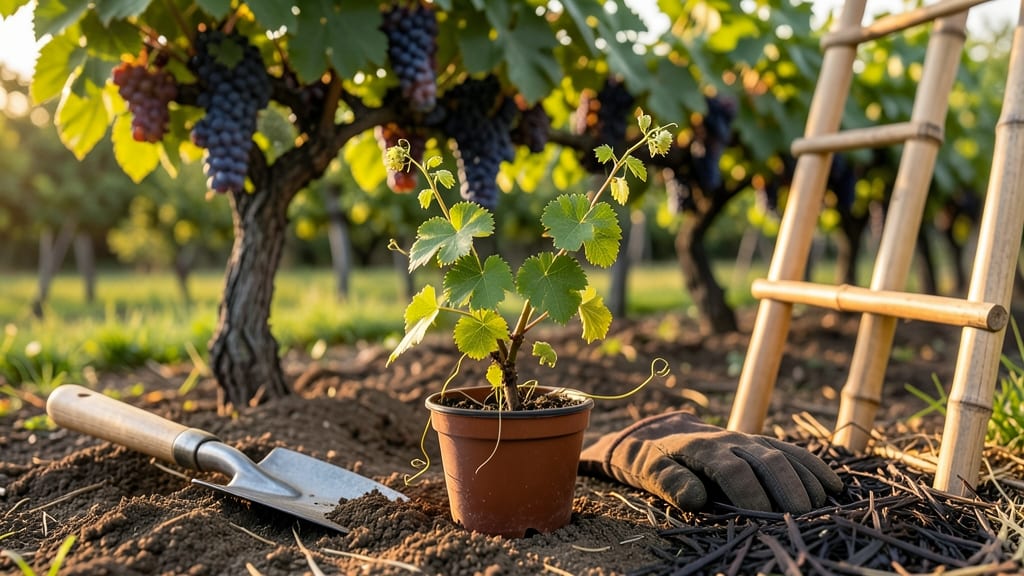
Timing your 🍇 grape vine planting in Texas isn’t just about the calendar—it’s about matching your variety to the region’s unique chill hours and frost patterns.
Plant too early in North Texas, and a late frost could wipe out your young vines; too late in South Texas, and your Muscadines might never get enough winter dormancy to fruit properly.
Most Texas gardeners know spring is the prime window, but the exact month depends on where you live. In North Texas (Zones 8a-8b), fall planting works best—giving vines time to establish roots before winter.
Meanwhile, Central and South Texas growers should wait until late winter or early spring when frost risks drop and soil warms.
Here’s the game-changer: pairing your grape variety with its ideal chill-hour zone. French hybrids like Cabernet Sauvignon need 500+ chill hours, while heat-loving Muscadines thrive with just 200-300**.
I’ll walk you through the precise planting windows for your Texas region, soil prep secrets, and how to avoid the 3 biggest mistakes that kill grape vines before they even bear fruit. Let’s get those vines in the ground the right way.
Texas grape planting Zones: matching chill hours to grape varieties
Texas’s diverse climate zones (from Zone 8a in the Panhandle to Zone 10b in South Texas) create unique challenges—and opportunities—for grape growers.
Unlike cooler climates, Texas grapes thrive on low chill hours (typically 200–600 hours below 45°F), but choosing the wrong variety can mean poor fruit set or no harvest at all.
The key to success? Matching your grape variety to your local chill-hour range. Muscadines, for example, need fewer chill hours (ideal for Zones 9–10), while French hybrids like Cynthiana or Blaufränkisch handle 300–600 chill hours, making them better for North and Central Texas.
Here’s how to align your grape selection with Texas’s three main regions—plus the best planting windows for each:
| Region | USDA Zone | Chill Hours | Best Varieties | Planting Window |
|---|---|---|---|---|
| North Texas | 8a–8b | 300–600 hrs | Cynthiana, Norton, Blaufränkisch, Chardonnay |
Late February–March or October–November |
| Central Texas | 8b–9a | 200–400 hrs | Muscadine, Scuppernong, French Colombard, Chenin Blanc |
Early March–April |
| South Texas | 9a–10b | 100–300 hrs | Muscadine, Flame Tokay, Black Spanish, Red Globe |
Late February–March |
For North Texas gardeners (Zones 8a–8b), fall planting (October–November) is a smart strategy—it allows vines to establish roots before winter dormancy. In contrast, Central and South Texas benefit from spring planting (March–April) to avoid late frosts that can damage tender new growth.
Pro tip: Check your local chill hours using the Texas A&M AgriLife Extension chill-hour calculator. Even a 100-hour difference can mean the difference between a bountiful harvest and no fruit at all.
If you’re in Zone 9 or higher, focus on heat-tolerant varieties like Muscadines or Flame Tokay, which handle Texas’s intense summer heat better than traditional wine grapes. These varieties also require less water once established, making them ideal for low-maintenance vineyards.
One common mistake? Assuming all grapes need high chill hours. In reality, Muscadines thrive with as few as 100–200 chill hours, while European varieties (like Cabernet Sauvignon) struggle in Zones 9–10 without supplemental chilling techniques.
For wine grape enthusiasts in North Texas, consider French hybrids like Lacrosse or Valvin Muscat, which balance moderate chill requirements with disease resistance—critical for Texas’s humid summers.
🍇
Step-by-step Texas grape planting timeline by region
Texas’s diverse climate means your grape planting schedule should align with your region’s last frost dates and chill-hour needs. North Texas (Zones 8a-8b) has cooler winters, while South Texas (Zones 9a-10b) rarely dips below freezing. Let’s break it down by region for foolproof timing.
For North Texas (Dallas/Fort Worth), aim for late winter (Feb-Mar) or fall (Oct-Nov) planting. The last frost typically hits around February 15, so wait until after this date to plant. Fall planting allows vines to establish roots before winter dormancy.
🌱 Step-by-Step Planting Timeline
- North Texas (Zones 8a-8b): Oct-Nov (Fall) or Feb-Mar (Spring) after last frost. Plant bare-root vines in well-draining soil with 6+ hours of sun.
- Central Texas (Zones 8b-9a): Feb-Mar (Spring) after February 1 last frost date. Avoid planting in low-lying areas where frost collects.
- South Texas (Zones 9a-10b): Jan-Feb (Winter) or May (Late Spring) for heat-tolerant varieties like Muscadines. Soil temps should be above 60°F.
🌡️ Pro Tip: Use a soil thermometer to confirm 60°F+ soil temps before planting in South Texas.
In Central Texas (Austin/San Antonio), focus on February-March planting after the February 1 last frost. This region’s mild winters make spring planting ideal, but avoid planting too early—soil should warm to at least 55°F. Choose French hybrids or Muscadines, which thrive in these zones.
For South Texas (Houston/Beaumont), where winters are rarely freezing, you have flexibility. Plant January-February for cool-season varieties or May for heat-loving Muscadines. Soil temperatures are critical—wait until they hit 60°F+ to prevent root rot.
After planting, prioritize consistent watering (1-2 gallons per vine) and mulching to retain moisture. In North Texas, protect young vines with frost cloth if late frosts occur. In South Texas, shade cloth can help vines acclimate during the hottest summer months.
Remember: Pruning in late winter (just before buds swell) is key for all regions. This encourages fruit-bearing canes and improves airflow to prevent fungal diseases like powdery mildew.
With this timeline, your grape vines will establish strong roots, survive Texas’s extremes, and reward you with a bountiful harvest from August-October. 🍇