
How To
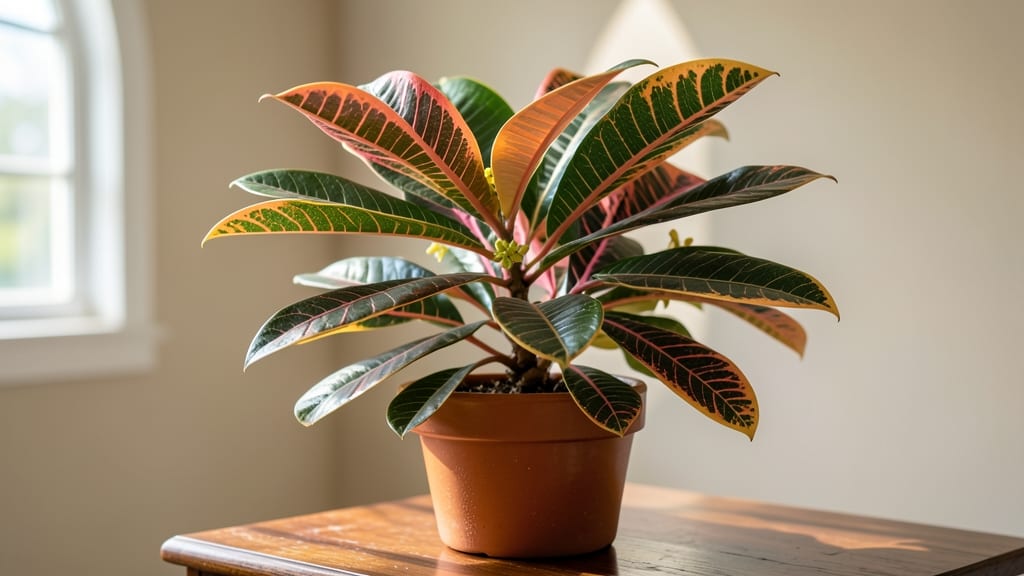
Wondering how tall your 🌿 croton plant will grow? The answer depends entirely on whether you're dealing with a compact dwarf variety or a bold, towering standard—because some crotons stay small enough for a windowsill while others reach ceiling height in just a few years.
If you're planning your space, here's the key: most crotons mature between 3 to 6 feet tall, but varieties like 'Petra' stay under 2 feet while 'Mammy' can stretch to 10 feet or more.
That's a huge difference for your layout—especially if you're working with limited room indoors or outdoor garden beds.
Light exposure and pruning play a huge role in controlling height, so I'll break down exactly how to encourage compact growth or manage a fast-growing specimen.
Whether you're choosing a croton for a tiny apartment or a bold garden statement, knowing these details will help you pick the perfect variety for your space.
Let's dive into the exact height ranges by type, plus the simple tricks to keep your croton at your ideal size—no matter how tall (or short) you want it to be.


Croton plant height ranges by variety: small to towering types
Crotons (Codiaeum variegatum) are stunning tropical plants prized for their vibrant foliage, but their height varies dramatically depending on the variety. Some stay compact enough for windowsills or small shelves, while others grow into towering statement plants perfect for garden borders.
Understanding these differences helps you choose the right croton for your space.
Most crotons fall into three broad height categories: dwarf varieties (under 3 feet), medium-sized plants (3-5 feet), and tall varieties (5+ feet). The Petra variety, for example, typically maxes out at 12-18 inches, making it ideal for indoor containers or office desks.
On the opposite end, the Mammy croton can reach 6-10 feet tall when grown outdoors.
Here’s how to match croton varieties to your space, whether you’re working with limited indoor real estate or designing a bold outdoor garden feature.
| Variety | Mature Height | Growth Habit | Best For |
|---|---|---|---|
| Petra | 12–18 inches | Compact, bushy | Indoor containers, shelves |
| Gold Dust | 2–3 feet | Upright, branching | Tabletop displays, small gardens |
| Black Prince | 3–5 feet | Tall, dramatic | Outdoor borders, large pots |
| Mammy | 6–10 feet | Tree-like, fast-growing | Tropical gardens, outdoor landscapes |
| Disco | 2–4 feet | Bushy, colorful | Indoor/outdoor versatility |
When selecting a croton, consider not just height but also spread. Some varieties like Gold Dust grow wider than they do tall, while others like Black Prince shoot upward rapidly. For indoor spaces, prioritize dwarf or semi-dwarf varieties to avoid overcrowding.
Outdoor crotons thrive in USDA zones 10-12 but can be grown in containers in cooler climates. If you’re planting outdoors, account for mature height and spread—a 6-foot-tall Mammy needs ample space to avoid shading smaller plants.
Always check the light requirements of your chosen variety, as insufficient sunlight stunts growth.
For container gardening, choose a pot that’s 10-15% larger than the plant’s root ball to prevent root-bound stress, which can limit height. Dwarf varieties like Petra do well in 6-inch pots, while larger types need 18-inch or larger containers to support their structure.
Remember, pruning encourages bushier growth in taller varieties. Regular trimming helps maintain a desired shape and height, especially for crotons grown indoors where space is limited. With the right variety and care, your croton can become a focal point in any garden or home.
🌿
Factors that influence croton plant height growth (and how to control it)
Understanding what shapes your croton plant's height helps you steer its growth toward your space needs. While genetics set the baseline, light exposure, pruning habits, and container size can dramatically alter how tall your plant becomes over time.
For example, a 'Mammy' croton left unpruned in bright light may reach 6+ feet, while the same variety in a small pot with regular trims stays compact. Let’s break down the key factors and how to manage them.
| Factor | Impact on Height | How to Control It |
|---|---|---|
| Light Exposure | More sun = faster, taller growth | Rotate pots for even light; limit to 4-6 hours/day for compact growth |
| Pruning Frequency | Regular pruning = bushier, shorter plants | Trim 1/3 of stems in spring to encourage branching |
| Pot Size | Small pots = slower, shorter growth | Upgrade pots by 2 inches every 2 years for taller varieties |
| Fertilizer Use | Excess nitrogen = leggy, tall growth | Use balanced 10-10-10 fertilizer; reduce in fall/winter |
| Seasonal Growth | Spring/summer = rapid growth; fall/winter = dormancy | Prune in late winter to shape growth for the season |
Light exposure is the most critical factor. Crotons thrive in bright, indirect light, but too much direct sun can stretch their stems, making them leggy and tall. Place your plant near an east-facing window for gentle morning light, or use sheer curtains to diffuse harsh afternoon rays.
Pruning isn’t just about shaping—it’s a growth regulator. When you trim back 1/3 of the plant’s height in early spring, you encourage bushier growth and prevent it from becoming top-heavy. Use clean, sharp scissors to cut just above a leaf node, and always sterilize your tools to avoid disease.
Container size plays a surprising role. Root-bound crotons grow slower and shorter because their roots can’t expand. If you’re aiming for a taller croton, upgrade to a pot that’s 2-3 inches larger in diameter every 1-2 years. For compact growth, keep it in a smaller pot and prune regularly.
Fertilizer choices matter too. Overfeeding with high-nitrogen fertilizers can lead to rapid, but weak, vertical growth. Instead, opt for a balanced 10-10-10 fertilizer and apply it every 4-6 weeks during the growing season. Reduce or stop fertilizing in fall and winter to let the plant rest.
Seasonal adjustments are key to managing height. Crotons grow most aggressively in spring and summer, so this is the time to prune and fertilize. In fall and winter, growth slows down, making it the perfect time to assess your plant’s shape and plan pruning for the next season.
By mastering these factors, you can grow a croton that fits your space perfectly—whether you want a waist-high statement plant or a compact tabletop beauty. 🌿