
Watering
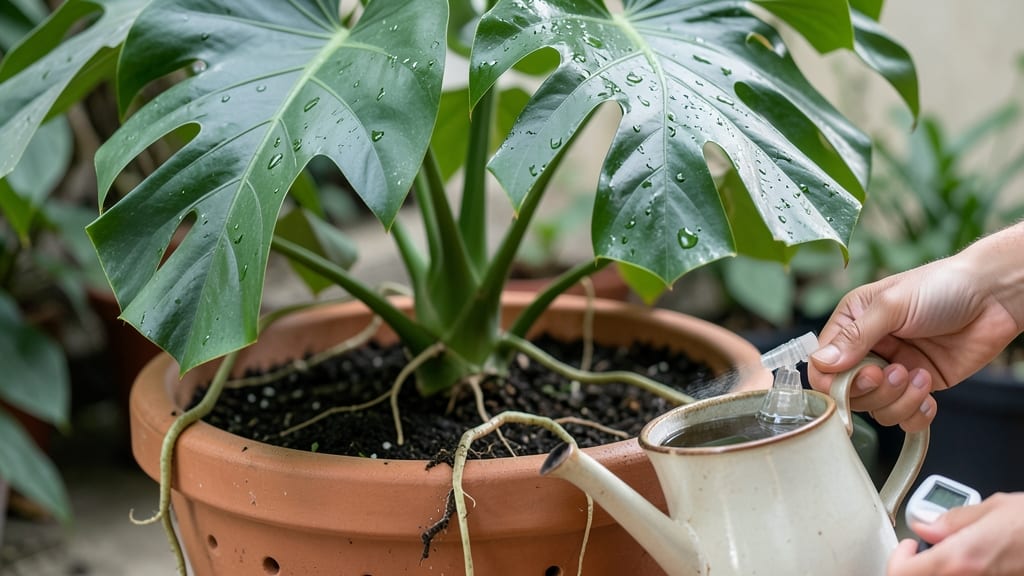
Monstera watering schedule by season (indoor vs outdoor conditions)
Your monstera plant thrives on consistency, but its watering needs shift dramatically with the seasons and whether it’s basking indoors or outdoors.
As someone who’s nursed monstera plants through all four seasons, I’ve learned that overwatering in winter or underwatering in summer can both spell disaster for those iconic split leaves. Let’s break down the exact schedule you need to keep your monstera happy year-round.
The key to watering a monstera is understanding its root zone—it prefers to dry out slightly between waterings but hates soggy soil. In summer, when humidity is high and growth is rapid, you’ll water more frequently.
In winter, when the plant slows down, you’ll scale back dramatically. And if your monstera lives outdoors during warmer months, it’ll drink up water faster than its indoor counterparts.
| Season | Indoor Monstera | Outdoor Monstera | When to Water | Soil Moisture Goal |
|---|---|---|---|---|
| Spring | Every 7-10 days | Every 5-7 days | When top 1-2 inches of soil are dry | Moist but not soggy |
| Summer | Every 5-7 days | Every 3-5 days | When top 1-2 inches are dry | Consistently moist |
| Fall | Every 10-14 days | Every 7-10 days | When top 2-3 inches are dry | Lightly moist |
| Winter | Every 3-4 weeks | Every 2-3 weeks | When top 3-4 inches are dry | Slightly dry |
Note: Adjust frequency based on humidity levels, pot size, and light exposure.
In spring, your monstera wakes up from its winter slumber and starts growing again. This is the perfect time to increase watering frequency, but don’t rush—wait until the top 1-2 inches of soil feel dry to the touch.
If you’re growing yours outdoors, it’ll need water more often due to increased evaporation and heat. I’ve found that container-grown monsteras dry out faster than those in the ground, so adjust accordingly.
When summer arrives, your monstera enters its growth phase, and you’ll see those beautiful new leaves emerging. During this time, indoor monsteras typically need water every 5-7 days, while outdoor plants may need it as often as every 3-5 days, especially in hot, dry climates.
The key is to keep the soil consistently moist but never waterlogged. I like to use the finger test: stick your finger about an inch into the soil. If it feels dry, it’s time to water.
As temperatures drop in fall, your monstera’s growth slows down, and so should your watering. Reduce frequency to every 10-14 days for indoor plants and every 7-10 days for outdoor ones. The goal is to let the soil dry out more between waterings.
This is also a great time to reduce humidity around your plant if you’ve been using a humidifier, as the cooler air naturally holds less moisture.
Winter is the most critical time to cut back on watering. Indoor monsteras can go 3-4 weeks between waterings, while outdoor plants might need water every 2-3 weeks, depending on your climate. The soil should be slightly dry to the touch before watering again.
Overwatering in winter is a common mistake that leads to root rot, so resist the urge to water on a schedule—always check the soil first.
One trick I’ve learned is to group your monsteras with other plants to create a microclimate. When placed together, they release moisture into the air, increasing humidity and reducing how often you need to water.
This works especially well for indoor gardens where humidity levels can drop dramatically due to heating systems. Just make sure your monstera still has bright indirect light—it won’t thrive in dark corners, even if the soil stays moist.
Finally, always water your monstera in the morning. This allows excess moisture to evaporate during the day, reducing the risk of fungal diseases. Avoid watering at night, as damp leaves can attract pests and promote mold growth.
With this seasonal schedule, your monstera will stay healthy, vibrant, and ready to reward you with those stunning variegated leaves all year round.
How to check if your monstera needs water (5 signs to look for)
Your monstera plant’s leaves speak volumes about its thirst level—you just need to listen. Unlike succulents that shrivel dramatically when dry, monsteras show subtle but clear signs. Stick your finger 1-2 inches into the soil first: if it feels bone-dry, it’s time to water.
But if you’re unsure, watch for these 5 key visual cues that reveal whether your plant is begging for hydration or drowning in excess moisture.
First, check the leaf color and texture. Healthy monstera leaves are deep green and slightly glossy. When thirsty, the leaves develop a dull, matte finish and may start curling at the edges. Yellowing leaves can signal either underwatering or overwatering—so you’ll need to check the roots next.
If the yellowing is paired with crispy edges, it’s likely thirst. But if the leaves feel soft or mushy, you’ve overdone it.
Next, examine the growth rate and new leaves. A well-watered monstera produces new leaves every 2-3 months with those iconic splits. If growth has stalled completely or new leaves are smaller than a dinner plate, your plant isn’t getting enough water.
Conversely, if you see mushy stems or black spots on leaves, roots may be rotting from too much moisture.
Don’t ignore the soil surface. After watering, the top inch should dry out within 3-5 days. If it stays soggy for longer, your monstera is sitting in waterlogged conditions.
Pro tip: Use a moisture meter or the knuckle test—press your knuckle into the soil. If it springs back slowly, water again.
Here’s a quick humidity check for indoor monsteras. These tropical plants thrive in 60-80% humidity. If your home’s air feels dry (especially in winter), your monstera may need water more frequently.
Place a hygrometer near the plant—if humidity drops below 50%, water every 5-7 days instead of waiting two weeks.
Finally, lift the pot to gauge weight. A properly hydrated monstera pot feels moderately heavy when lifted. If it’s light as a feather, the roots are desperate for water. But if it feels unusually heavy, drainage may be poor, and roots could be suffocating.
- 👆 Finger Test: Soil dry 1-2" deep → Water now
- 🍃 Leaf Texture: Dull/matte leaves → Needs hydration
- ⏳ Growth Rate: No new leaves in 3+ months → Underwatered
- 💧 Soil Surface: Soggy >5 days → Reduce watering
- 🏺 Pot Weight: Light as air → Roots are thirsty
Remember, monsteras store water in their thick stems, so they tolerate brief dry spells better than soggy conditions. When in doubt, water less frequently—you can always add more water next time, but you can’t undo root rot.
Trust your observations, and your monstera will reward you with those glorious split leaves you love.