
Plants
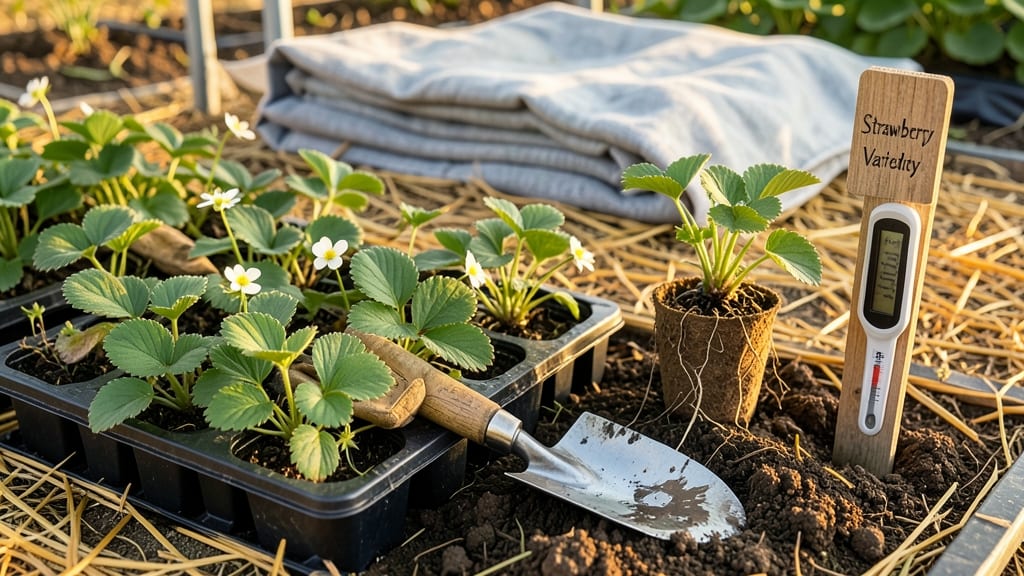
Planting strawberries in Ohio at the wrong time can mean the difference between a bountiful harvest and a sad, frost-nipped disappointment.
The key to success lies in matching your 🍓 strawberry varieties to Ohio's chill-hour requirements and planting them at the optimal window—before the last frost date of April 15 for spring or after September for fall.
Ohio's USDA Zone 6a climate means you've got two prime chances to get strawberries in the ground: early spring or early fall. While many gardeners default to spring planting, fall can actually give your berries a head start on root growth before winter.
The trick is knowing which varieties thrive in your specific chill-hour range—some need 300 hours while others prefer 1,000+ hours.
I've learned the hard way that planting too early risks frost damage, while waiting too late means missing the sweet spot for strong establishment.
In this guide, I'll walk you through the exact planting windows for Ohio's most reliable varieties, plus soil prep tips and post-planting care to ensure your strawberries not only survive but thrive through Ohio's unpredictable seasons.
Whether you're a first-time gardener or a seasoned grower looking to boost your harvest, these strategies will help you avoid common mistakes and get the most out of your strawberry patch. Let's get those berries growing the right way!
Ohio strawberry planting timeline by chill-hour requirements
Ohio’s USDA zones 5-7 mean your strawberry planting success hinges on matching varieties to their chill-hour needs. June-bearing types need 300-500 chill hours, while everbearing varieties thrive with 500-1,000 chill hours. Planting too early risks frost damage, while waiting too long cuts harvest potential.
For spring planting, aim for 4-6 weeks before Ohio’s last frost date (mid-April). This gives plants time to establish roots before summer heat arrives. Fall planting should occur 6-8 weeks before first frost (mid-October) to ensure roots harden before winter.
Soil temperature is critical—wait until it reaches at least 40°F for spring planting. Use a soil thermometer to avoid planting in cold, wet ground, which can rot roots. Ohio’s humid summers also mean mulching is non-negotiable to retain moisture.
Here’s how chill hours and frost dates determine your planting window:
| Variety Type | Chill Hours Needed | Spring Planting Window | Fall Planting Window | Soil Temp Requirement |
|---|---|---|---|---|
| June-Bearing | 300-500 | March 15 - April 15 | September 1 - September 30 | ≥40°F |
| Everbearing | 500-700 | March 20 - April 10 | September 15 - October 10 | ≥40°F |
| Day-Neutral | 300-1,000 | April 1 - April 30 | September 1 - October 15 | ≥45°F |
*Adjust dates 1-2 weeks earlier for northern Ohio (Zone 5) or later for southern Ohio (Zone 7).
Northern Ohio gardeners in Zone 5 should plant June-bearing varieties 2 weeks earlier than the table suggests, while southern Ohio’s Zone 7 growers can extend windows by 1-2 weeks. Always check your local frost date averages—Ohio’s can vary by 10 days year to year.
For container gardening, warm up pots with black plastic wrap before planting to speed root establishment. This is especially useful in Ohio’s cool springs, where ground temperatures lag behind air temps. Containers also let you move plants to protected microclimates if frost threatens.
After planting, monitor for early bloom signs—if flowers appear before May 1, protect them with frost cloth. Ohio’s late spring frosts (common until May 10) can devastate early blooms. Everbearing varieties are more frost-tolerant but still benefit from row covers during sub-28°F nights.
Fall-planted strawberries need 6-8 weeks to establish roots before winter. In Ohio, this means planting by October 1 in the north and October 15 in the south. Use straw mulch (4-6 inches) to insulate roots and prevent heaving during freeze-thaw cycles.
Pro tip: Mark your calendar for Ohio’s average last frost date (April 15) and first frost date (October 15). These dates are your planting anchors—adjust by 1-2 weeks based on your microclimate. Urban areas often run 2-3°F warmer than rural zones, extending your window slightly.
Best strawberry varieties for Ohio gardens and their planting secrets
Ohio’s diverse climate means not all strawberry varieties thrive equally. June-bearing types like 'Jewel' produce one massive harvest but need 600+ chill hours. Meanwhile, everbearing varieties like 'Honeoye' deliver two smaller crops with 400-500 chill hours.
For urban gardeners, day-neutral 'Seascape' offers continuous fruit with just 300 chill hours—perfect for containers!
Bare-root plants are cheaper but need soaking for 6-8 hours before planting. Potted varieties cost more but let you plant anytime soil isn’t frozen. Mulch with straw or pine needles to retain moisture and suppress weeds—critical in Ohio’s hot summers and humid springs.
Pro Tip: Test your soil’s pH (aim for 5.5-6.5). Ohio’s clay-heavy soils often need compost or peat moss to improve drainage. Amend beds 2-3 weeks before planting for best results.
🌱 Variety Planting Secrets for Ohio
June-Bearing ('Jewel')
- ✅ Pros: Huge harvest, 600+ chill hours
- ✅ Best for: Large families, canning
- ❌ Cons: Needs staking for support
Everbearing ('Honeoye')
- ✅ Pros: Two harvests, 400-500 chill hours
- ✅ Best for: Small gardens, urban containers
- ❌ Cons: Smaller berries
Day-Neutral ('Seascape')
- ✅ Pros: Continuous fruit, 300 chill hours
- ✅ Best for: Balconies, long seasons
- ❌ Cons: Needs pruning to control spread
For container gardening, choose 5-gallon pots with drainage holes. Use a lightweight potting mix (not garden soil) and plant 3-4 crowns per pot to maximize yield. In Ohio’s Zone 6a, containers warm up faster—start them 2 weeks earlier than in-ground beds.
After planting, water deeply every 3-5 days and avoid wetting leaves to prevent gray mold. Ohio’s summer humidity makes strawberries vulnerable—space plants 18-24 inches apart for airflow. A 2-inch layer of mulch keeps roots cool and berries clean.
Remember: Fall-planted strawberries establish roots before winter and fruit earlier the next year. If you miss spring, September is your second chance—just plant 6-8 weeks before frost (aim for October 1 in most of Ohio).