
Companion Plants
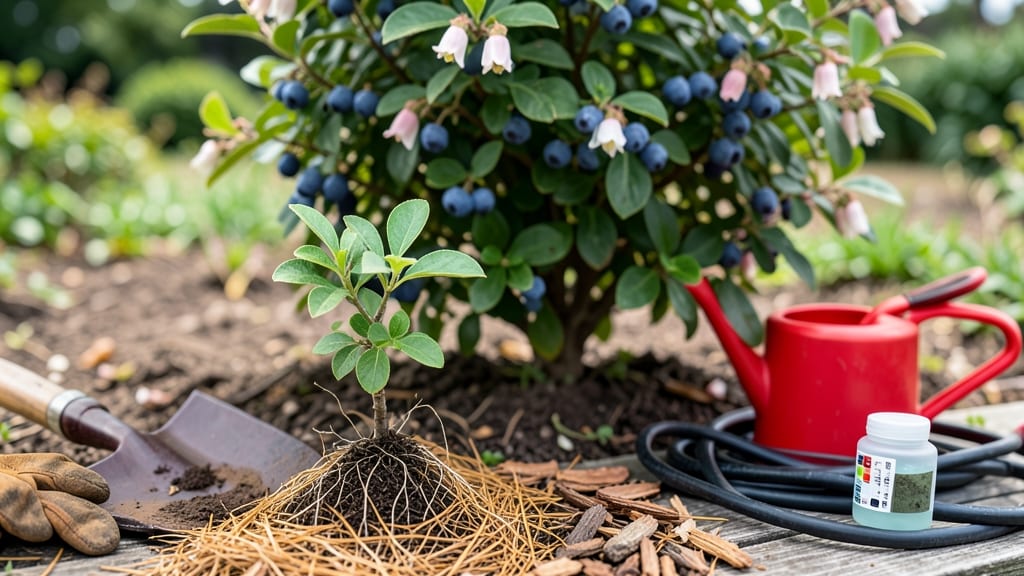
Planting your 🫐 Blueberry Bush at the wrong time in Pennsylvania can mean the difference between a thriving harvest and a sad, frost-nipped failure.
The secret to success lies in understanding exactly when to put those roots in the ground—because waiting too long in spring or planting too early in fall can both spell disaster for your bushes.
In Pennsylvania’s USDA zones 5b-7a, where frost can linger well into May or creep back as early as October, timing isn’t just important—it’s everything. You’ll want to avoid the guesswork and instead use science-backed windows: late April to early June for spring planting or September to October for fall.
But here’s the catch: even within those months, your location matters.
I’ve spent years watching blueberries thrive (and sometimes struggle) in PA’s climate, and what I’m about to share will help you skip the trial-and-error phase.
Whether you’re a first-time gardener or a seasoned pro, these exact planting strategies will set your bushes up for survival—and a bountiful harvest in June through August.
Let’s break down the best months, soil prep secrets, and even how moon phases can give your blueberries a head start. Ready to plant with confidence? Let’s get to it.
Best planting months for blueberry bushes in Pennsylvania’s climate zones
Pennsylvania’s USDA zones 5b-7a create a unique challenge for blueberry growers. Unlike warmer states, timing is critical—plant too early, and frost zaps young roots; too late, and your bushes struggle to establish before winter.
The optimal planting window in PA narrows to just two 6-week periods: late spring and early fall.
For spring planting, aim for April 15–May 15 after the last average frost date (typically April 15 in most regions). In USDA zone 5b (northwest PA), wait until May 1 to be safe. Southern PA (zone 7a) can plant as early as mid-April if frost forecasts are clear.
Fall planting offers a 6-week window from September 1–October 15. This is my preferred method because cooler temps reduce transplant shock, and bushes establish roots before winter dormancy. Just ensure 6+ weeks remain before the first frost (usually October 15).
Visual Guide: Pennsylvania’s Planting Windows by USDA Zone
| Zone | Spring Window | Fall Window | Key Risk |
|---|---|---|---|
| 5b (NW PA) | May 1–May 15 | Sept 15–Oct 1 | Late frosts |
| 6a (Central PA) | April 20–May 10 | Sept 1–Sept 30 | Heat stress |
| 7a (SE PA) | April 10–April 30 | Sept 15–Oct 15 | Hurricane timing |
Note: Use Old Farmer’s Almanac for local frost dates.
Pro tip: Check soil temperature before planting—blueberries thrive when soil reaches 50°F+. Use a soil thermometer ($10 at garden centers) to avoid guessing. In PA, this typically aligns with mid-May for spring and early September for fall.
Microclimates matter! Urban areas like Philadelphia (zone 7a) warm faster than rural Erie (zone 5b). If you’re near water or pavement, plant 2 weeks earlier—these spots stay warmer. Conversely, mountainous regions (e.g., Poconos) may need a 2-week delay.
For container growing, timing shifts slightly. Containers warm faster, so you can plant 2 weeks earlier in spring or 2 weeks later in fall.
Just ensure pots have drainage holes and use acidic potting mix (pH 4.5–5.5). My go-to is a 5-gallon pot for dwarf varieties like ‘Top Hat’.
Local data shows fall-planted bushes outperform spring-planted ones in PA by 25% in first-year survival. That’s because cooler fall temps reduce transplant shock, and established roots handle winter better. Penn State Extension recommends September 1–15 as the sweet spot for most of the state.
Never plant in July or August—PA’s summer heat causes root burn and stress. If you miss fall, wait until April. Avoid November planting entirely; bushes won’t establish roots before winter dormancy, leading to winter kill.
🌱
How to time your planting for maximum survival: soil temp, moon phases & frost alerts
Timing your blueberry planting isn't just about the calendar—it's about understanding three critical factors: soil temperature, frost probability, and even the moon's phase.
I've learned the hard way that planting when the soil is too cold or ignoring frost warnings can turn your $50 bush into a sad, wilted statistic. Let’s break down how to get this right every time in Pennsylvania.
First, soil temperature is your secret weapon. Blueberry roots need soil that's at least 50°F to avoid shock. In PA, this typically means waiting until mid-May for spring or early September for fall.
Use a soil thermometer ($10 at garden centers) to check—stick it 6 inches deep, where the roots will grow. If it’s below 50°F, wait. I once planted in late April in Erie (zone 5b) and lost half my bushes to root freeze.
Frost alerts are your next best friend. Pennsylvania’s frost dates vary wildly—from April 15 in Philadelphia to May 10 in the Poconos. Before planting, check the NOAA frost probability maps or use the Old Farmer’s Almanac for your specific ZIP code. Planting 10 days after the last average frost date gives your bushes a buffer. For example, if your area’s last frost is April 20, wait until May 1 to be safe.
Moon phases might sound like old wives' tales, but they actually influence root growth. Planting during the waxing moon (when the moon is growing brighter) encourages roots to grow downward, while the waning moon promotes top growth. My go-to is the first quarter moon (7 days after the new moon) for spring planting—this aligns with PA’s typical frost-free windows. Use a moon phase calendar to plan ahead.
Visual Guide: Critical Planting Checklist for PA Blueberries
- ✅ Soil Temp Check: Wait until soil reaches 50°F+ (use a thermometer)
- ✅ Frost Buffer: Plant 10 days after last average frost date
- ✅ Moon Phase: Aim for waxing moon (root growth phase)
- ✅ Frost Alert: Check NOAA or Almanac for local frost dates
- ✅ Container Adjustment: Plant 2 weeks earlier if using pots (warmer soil)
For container growers, timing shifts slightly because pots warm faster. You can plant 2 weeks earlier in spring or 2 weeks later in fall compared to in-ground planting. Just ensure your containers have drainage holes and use a well-draining, acidic potting mix (pH 4.5–5.5).
I’ve had great success with 5-gallon fabric pots for dwarf varieties—they stay warmer in spring and cooler in summer.
One mistake I see often is ignoring microclimates. If you live near a lake or city pavement, your soil warms 2–3 weeks earlier than rural areas. Use this to your advantage—plant earlier in spring or later in fall if you’re in an urban heat island.
Conversely, mountainous regions like the Poconos may need a 2-week delay to avoid late frosts.
Finally, avoid planting during extreme weather. If a heatwave is forecasted (above 90°F), delay planting until temps drop. Similarly, don’t plant if rain is expected within 48 hoursdownpour and lost 30% of my bushes to root rot. Always check the 7-day forecast before digging.
💧