
Plants
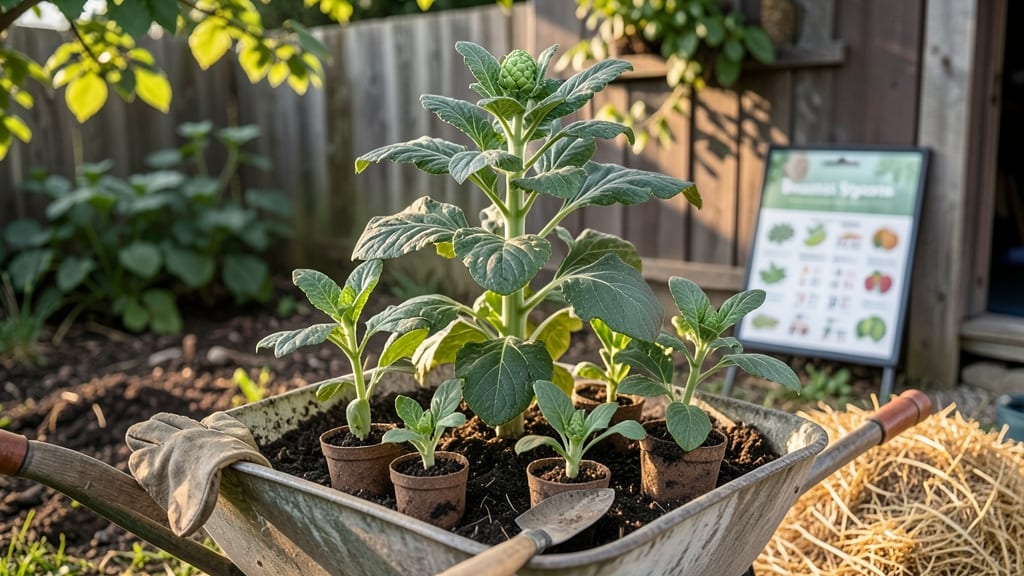
Planting Brussel sprouts 🥦 in Southern California isn’t just about timing—it’s about outsmarting the region’s unpredictable microclimates.
While most of us never see frost, inland areas like Riverside can still get chilly enough to stress these cool-weather crops, and coastal spots like Santa Barbara stay mild enough to trick them into bolting too soon.
If you’ve ever watched your Brussel sprouts bolt into flower before producing a single harvestable sprout, you know the frustration. The key? Planting them when soil temps dip below 75°F but before winter rains turn your garden into mud.
For most of SoCal, that means September-October for fall crops or February-March for a spring harvest—with adjustments based on whether you’re near the coast or tucked in the desert.
I’ve tested these windows in my own 9b-11 zone garden, and the difference between a bumper crop and a sad, stunted plant comes down to three critical factors: soil prep, shade management, and knowing when to hold off on watering.
Let me walk you through the exact schedule—and the common mistakes that derail even the best-laid plans.
By the end, you’ll know not just when to plant Brussel sprouts, but how to tweak your approach for your specific corner of Southern California. Whether you’re a coastal gardener or dealing with desert heat, these insights will help you turn your garden into a year-round sprout factory.
Southern California microclimates: best planting months by region
Southern California’s diverse climate—from frost-free coastal areas to desert heat—means Brussel sprouts planting times vary dramatically. While most of us never see frost, inland valleys like Riverside can dip below 40°F, while coastal spots like Santa Barbara stay mild enough to trick plants into bolting.
The key? Plant when soil temps hit 60-70°F but before winter rains turn your garden into mud.
For coastal regions (USDA 9b-10), like Santa Barbara or San Diego, your window is August-September for fall crops. Inland areas (USDA 10a-11) like Los Angeles or Riverside should aim for September-October.
Desert zones (USDA 10b-11) like Palm Springs or Yuma can push to October-November but must protect plants from late-season heat spikes.
Here’s the breakdown by region, including adjustments for high-altitude areas like Big Bear (USDA 8b-9a), where frost is a real risk:
| Region | USDA Zone | Best Planting Window | Soil Temp Goal (°F) | Key Risks | Adjustments |
|---|---|---|---|---|---|
| Coastal (Santa Barbara, San Diego) | 9b-10 | August 15 - September 15 | 60-70°F | Bolting from heat | Use 30% shade cloth in Sept |
| Inland (Los Angeles, Riverside) | 10a-11 | September 1 - October 15 | 65-75°F | Late-season heat spikes | Plant near drip irrigation for moisture |
| Desert (Palm Springs, Yuma) | 10b-11 | October 1 - November 15 | 60-70°F | Extreme heat/drought | Use mulch and drip lines |
| High Altitude (Big Bear) | 8b-9a | September 15 - October 30 | 55-65°F | Frost risk | Choose early-maturing varieties (e.g., 'Long Island Improved') |
Pro tip: Soil temperature matters more than air temp. Use a soil thermometer to confirm readings—Brussel sprouts won’t germinate well above 75°F. If your soil runs hotter, start seeds indoors 6-8 weeks before transplanting to avoid bolting.
For spring planting (February-March), focus on inland valleys where nights stay cool. Coastal areas risk heat stress by April, so stick to fall crops unless you’re using row covers to extend the season.
Remember: Succession planting every 2-3 weeks within your region’s window ensures a continuous harvest. For example, in Los Angeles, plant one batch in early September and another in mid-October to stagger maturity.
If you’re in a desert microclimate, prioritize shade and water retention. A 50% shade cloth can drop soil temps by 10-15°F, making October planting viable where September would fail.
Finally, high-altitude areas like Big Bear need cold-hardy varieties and earlier planting. Aim to harvest before November 15 to avoid frost damage, even in USDA 9a zones.
By aligning your planting with these regional windows, you’ll dodge the two biggest Brussel sprout killers in SoCal: bolting from heat and stunted growth from inconsistent temps. Next, we’ll cover how to extend the season even further with shade and companion planting.
How to extend the growing season for Brussel sprouts in warm climates
Even with perfect timing, Southern California’s warm winters can trick Brussel sprouts into bolting before they produce harvestable sprouts. The solution? Strategic season extension using shade, succession planting, and soil management.
I’ve used these techniques in my own USDA 10a garden to push harvests from December to February—and even coax a few spring sprouts in cooler inland valleys.
First, shade cloth is your best friend. A 30-50% shade cloth can drop soil temps by 10-15°F, preventing bolting during late-summer heat. For example, if you plant in early September in Los Angeles, install shade by mid-September to protect seedlings as temps rise.
Remove it in October once nights cool.
Here’s how to maximize your growing window with practical, region-specific strategies:
5 Proven Season-Extension Tactics for SoCal
For spring planting (February-March), focus on inland valleys where nights stay below 60°F. Coastal gardeners should skip spring planting unless using row covers—by April, even partial shade won’t prevent heat stress. Instead, prioritize fall crops and use succession planting to extend harvests into January.
One common mistake? Overwatering in clay soils. Brussel sprouts need consistent moisture, but soggy soil leads to rot. Use a moisture meter to aim for 60-70% soil moisture—never let them dry out, but avoid waterlogged conditions.
In desert microclimates, drip irrigation on a timer (early morning) is non-negotiable.
Finally, companion planting can regulate temps. Pair Brussel sprouts with bush beans or lettuce, which provide light shade and improve soil structure. Avoid planting near tomatoes or peppers, which compete for nutrients and raise soil temps.
By combining these strategies, I’ve pushed my Brussel sprout season from a 4-week harvest window to 10+ weeks. The key is adapting to your microclimate—whether that means heavier shade in the desert or earlier spring starts in inland valleys.
Next, we’ll cover the 5 biggest mistakes that turn promising plants into flops—and how to avoid them.