
Companion Plants
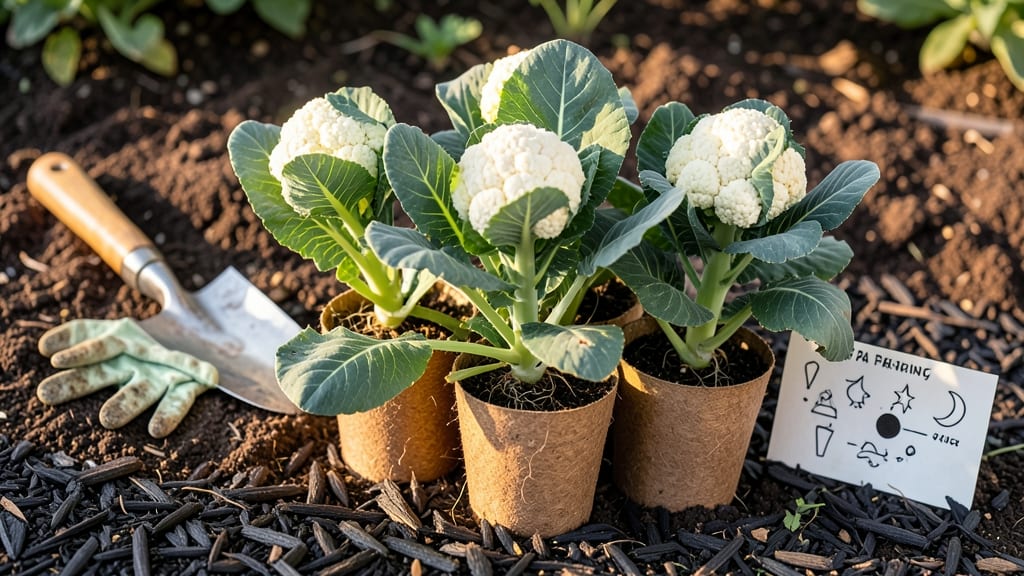
Timing your 🥬 cauliflower planting in Pennsylvania isn't just about throwing seeds in the ground—it's about outsmarting the weather before summer heat turns your crop into a sad, wilted memory.
With PA's 5b-7a zones swinging from chilly springs to scorching summers, getting those seedlings in at the right moment means the difference between a bountiful harvest and a bolted disappointment.
Most gardeners here swear by two planting windows: late March to early April for that spring crop you'll harvest by July, or late July to early August for a fall harvest that lasts through October.
But here's the catch—cauliflower hates heat, and once temperatures hit 75°F+, those tender plants will bolt faster than you can say "cabbage family."
I've learned the hard way that rushing seedlings into the garden too early (when frost still lingers) or too late (when the sun gets aggressive) can ruin your whole season. The secret?
Start seeds indoors 6-8 weeks before your last frost date, then transplant those hardy little plants when soil temps hit 45°F+—just as the soil warms enough to prevent stunted growth.
Ready to grow 🥬 cauliflower that actually thrives? Let's break down the exact planting schedule, variety picks, and pro tips to keep your crop cool and productive—no matter what PA throws at you this season.
Best planting times for cauliflower in Pennsylvania’s climate zones
Pennsylvania’s USDA zones 5b-7a create a unique challenge for growing cauliflower—cool springs and hot summers demand precise timing. The key is planting when soil temps hit 40-50°F for germination, while avoiding summer’s 75°F+ heat that triggers bolting.
Let’s break down the two ideal windows and how to adapt for your specific region.
For spring planting, start seeds indoors 6-8 weeks before your last frost date (typically late March to early April). In most of PA, this means sowing seeds by March 15-20 for outdoor transplanting by April 15.
Seedlings should be hardened off and moved to the garden 2-3 weeks before the last frost to give them time to establish roots before summer heat arrives.
If you miss spring, don’t despair—fall planting works beautifully in PA. Aim to transplant seedlings by late July to early August, giving them 80-100 days to mature before the first frost (usually mid-October).
This second crop often produces sweeter, more tender heads because the cooler fall temps prevent bolting.
Here’s how to adjust for PA’s microclimates: In cooler northern regions (like Erie or Scranton), you can push spring planting slightly later (early April). In hotter southern areas (like Philadelphia or Harrisburg), start seeds 2 weeks earlier indoors to beat the heat.
Always check your local frost-free date—it varies by 5-10 days across the state.
Now, let’s compare your options side by side to pick the best strategy for your garden:
🌱 Spring vs. Fall Planting in PA
| Factor | Spring Planting | Fall Planting |
|---|---|---|
| Planting Window | Late March–Early April | Late July–Early August |
| Soil Temp | 40–50°F for germination | 50–60°F for transplanting |
| Harvest Time | June–July | October–November |
| Heat Risk | High after May | Low in fall |
| Best For | Early eaters, cooler zones | Sweeter heads, heat avoidance |
| Transplant Timing | 2–3 weeks before last frost | 80–100 days before first frost |
One common mistake PA gardeners make is planting too late in spring, only to watch their cauliflower bolt as temperatures climb. To avoid this, choose early-maturing varieties (like ‘Snowball Y Improved’) for spring, which take just 60-70 days to harvest.
For fall, opt for slightly slower varieties (like ‘Purple of Sicily’) that can handle cooler temps and still produce heads before frost.
If you’re in a warmer microclimate (e.g., Pittsburgh or Allentown), consider a partial shade strategy for spring plantings. Use 30-50% shade cloth during peak afternoon sun (1 PM–4 PM) to keep soil temps below 75°F.
This simple trick can extend your spring harvest by 2-3 weeks and prevent premature bolting.
For those in cooler mountain regions (like State College or Scranton), you can experiment with early March sowings under row covers or in a cold frame.
Just be prepared to protect seedlings from late frosts, which can damage young plants. A lightweight frost blanket works wonders for a few extra degrees of protection.
Remember, soil temperature is more critical than air temperature for cauliflower. Use a soil thermometer to confirm temps are 40°F+ before planting. If your soil is still cold, wait another week—rushing leads to poor germination and weak seedlings. Patience here pays off with stronger plants that resist bolting.
Finally, always have a backup plan for unexpected heat waves. If your forecast shows three consecutive days above 80°F during head formation, consider harvesting smaller heads early or using mulch to insulate roots.
A thick layer of straw or grass clippings can keep soil temps 5-10°F cooler at the surface.
Cold-hardy cauliflower varieties perfect for PA gardens
Not all cauliflower varieties handle Pennsylvania’s cool springs and hot summers equally. The right choice makes the difference between a bolted disappointment and a bountiful harvest. I’ve grown these top 5 cold-hardy varieties in my PA garden, and they consistently deliver—even when temps flirt with 80°F+.
Let’s dive into what works best for your microclimate.
For spring plantings, prioritize varieties that mature in 60-70 days to beat the heat. My go-to is ‘Snowball Y Improved’, a classic white cauliflower that thrives in cooler temps and resists clubroot disease, a common PA pest.
Its large, tight heads (8-10 inches) make it ideal for June-July harvests before summer really kicks in.
If you’re planting for fall harvests, ‘Purple of Sicily’ steals the show. This heirloom variety tolerates cooler fall temps and even light frosts, producing vibrant purple heads that stay sweet until November.
Its 70-80 day maturity gives it time to bulk up before the first frost, and the unique color makes it a garden standout.
Here’s a quick reference for the best varieties to grow in PA, including their maturity times, spacing needs, and pest resistance:
🥬 Top PA Cauliflower Varieties
| Variety | Maturity Days | Head Size | Spacing | Best For | Pest Resistance |
|---|---|---|---|---|---|
| Snowball Y Improved | 60-70 days | 8-10 inches | 18-24 inches apart | Spring harvests | Clubroot, cabbage worms |
| Purple of Sicily | 70-80 days | 6-8 inches | 18 inches apart | Fall harvests | Heat, frost |
| Graffiti | 65-70 days | 6-8 inches | 18 inches apart | Early spring | Disease-resistant |
| Cheddar | 70-80 days | 6-8 inches | 18 inches apart | Fall succession | Heat tolerance |
| White Magic | 60-75 days | 7-9 inches | 24 inches apart | Spring/fall | Bolting resistance |
For warmer microclimates (like Philadelphia or Lancaster), ‘Cheddar’ is a game-changer. Its yellow-orange curds stay sweet even when temps hover around 80°F, and it’s less likely to bolt than traditional white varieties.
I’ve had success with it in late July plantings, harvesting heads in October when other varieties would have given up.
If you’re dealing with shady spots or cool mountain regions (like Poconos or Allegheny Front), ‘White Magic’ is your best bet. It tolerates partial shade better than most varieties and produces compact heads even in cooler, shorter seasons.
Plus, its bolting resistance means fewer surprises when spring drags on.
One critical tip for PA gardeners: avoid late-season varieties like ‘Romanesco’ unless you’re in a very cool microclimate. These take