
Plants
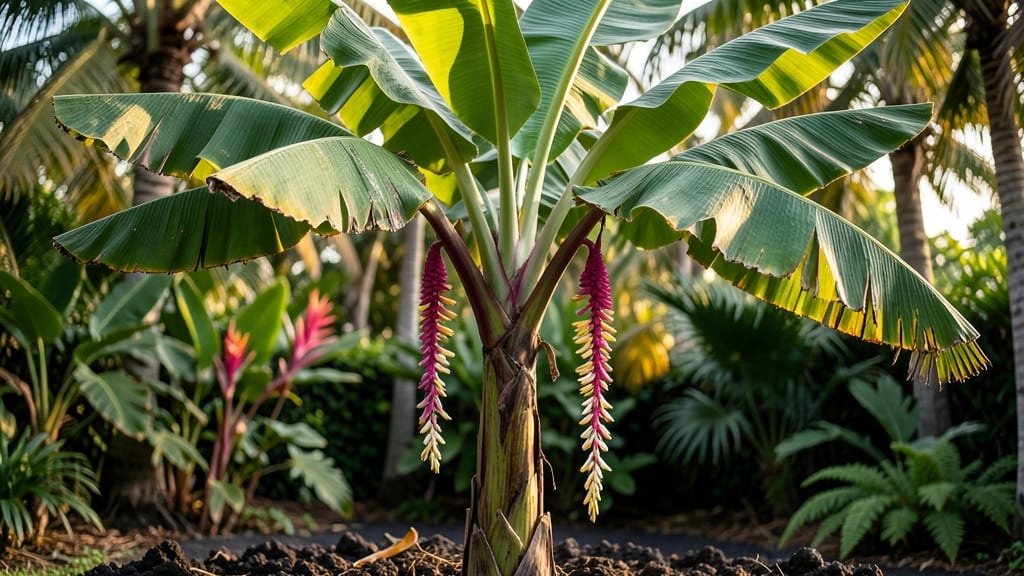
If you’ve ever wondered just how tall banana plants grow, you’re not alone—these tropical giants can reach heights that’ll make your backyard feel like a jungle! While some varieties stay compact enough for containers, others shoot up like skyscrapers, with mature plants towering over 20 feet in ideal conditions.
The truth is, your 🍌 banana plant’s height depends entirely on the variety you choose. Dwarf types like the Cavendish might stay around 10 feet, while commercial giants like the Gros Michel can stretch toward 30 feet—that’s taller than a two-story house!
But here’s the kicker: even "small" banana plants grow faster than you’d expect, sometimes adding 10 feet in just one year.
Before you rush to plant, there’s more to consider than just height. Climate, soil, and even your local frost zone (if you’re pushing the limits in zones 9-11) can dramatically affect how big your banana plant becomes.
And let’s clear up a common myth: despite their tree-like appearance, bananas are actually herbaceous plants with no true woody trunk—just layers of leaf sheaths.
In this guide, I’ll break down the exact height ranges by variety, share spacing tips to avoid crowding, and reveal the 5 biggest mistakes that make banana plants grow either too tall (or too short).
Whether you’re dreaming of a backyard harvest or just want a dramatic tropical accent, you’ll learn how to pick the perfect banana for your space—and keep it thriving.


Banana plant height by variety: from dwarf to giant cultivars
Banana plants aren’t trees—they’re giant herbaceous plants with pseudo-stems that can grow surprisingly fast. The height of a banana plant depends entirely on its variety, with some reaching tall as a two-story house while others stay compact enough for containers.
Understanding these differences helps you pick the perfect plant for your space.
First, let’s debunk a myth: banana plants aren’t trees in the botanical sense. They’re monocots (like lilies) with a pseudo-stem made of tightly packed leaves. This structure allows them to grow 1-2 feet per month under ideal conditions, making height a critical factor in planning your garden layout.
Below is a breakdown of banana plant heights by variety, including dwarf, medium, and giant types. I’ve included their mature heights, ideal growing conditions, and space requirements so you can visualize how they’ll fit in your garden—or whether you’ll need to opt for containers.
| Variety | Mature Height | Growth Rate | Space Needs | Best For |
|---|---|---|---|---|
| Dwarf Cavendish | 8–12 ft | 1–1.5 ft/month | Containers (15+ gal) or small yards | Urban gardens, patios |
| Lady Finger (Red Dacca) | 12–18 ft | 1.5–2 ft/month | Medium yards or large pots (25+ gal) | Subtropical climates, tropical landscapes |
| Musa acuminata (Wild Banana) | 15–25 ft | 2–3 ft/month | Large gardens or tropical estates | Ornamental use, large-scale farms |
| Gros Michel (Big Mike) | 20–30 ft | 2.5–3 ft/month | Rural properties, tropical climates | Commercial growing, large backyards |
| Ice Cream Banana (Musa × paradisiaca) | 10–15 ft | 1.5 ft/month | Containers (20+ gal) or small spaces | Edible flowers, urban homesteads |
The Dwarf Cavendish is the best choice for container growing, topping out at just 8–12 feet. This makes it ideal for patios or balconies, especially in USDA Zones 10–12.
Meanwhile, the Gros Michel can reach 20–30 feet, requiring a large, open space and full sun exposure to thrive. If you’re in a cooler climate (Zones 9–11), opt for semi-dwarf varieties like Lady Finger, which balances height and manageability.
One factor often overlooked is the root spread of banana plants. Even dwarf varieties can spread 6–10 feet wide, so ensure your planting area accounts for this. For containers, choose pots at least 15–20 gallons in size to prevent root binding, which stunts growth and reduces fruit production.
Climate plays a huge role in banana plant height. In tropical regions, plants grow faster and taller due to year-round warmth. In subtropical zones, growth slows in winter, often halting entirely below 50°F (10°C).
If you’re in a cooler zone, consider growing banana plants in greenhouses or pots that you can move indoors during winter.
Pro tip: Prune lower leaves to encourage upward growth, but avoid cutting more than 20% of the foliage at once. This helps manage height while maintaining the plant’s energy for fruit production.
For varieties like Gros Michel, regular pruning is essential to prevent them from becoming unmanageable in small spaces.
If you’re growing bananas for fruit production, remember that taller plants don’t always mean better yields. Dwarf Cavendish, for example, produces smaller but more frequent bunches compared to giant varieties, which may take 12–18 months to fruit but yield larger clusters.
Balance your goals—whether it’s height control or maximizing harvests—when selecting your variety.
Banana plant height by variety: from dwarf to giant cultivars
Banana plants aren’t trees—they’re giant herbaceous plants with pseudo-stems made of layered leaves. Their mature height can vary dramatically, from 8-foot dwarfs to 30-foot jungle giants, depending on the variety. Understanding these differences helps you choose the right plant for your space and climate.
Most home gardeners grow dwarf or semi-dwarf varieties because they’re easier to manage in containers or small yards. However, even these can reach 12-18 feet tall with proper care. If you’re in a tropical climate with ample space, standard varieties like Gros Michel can grow taller than a two-story house!
🌱 Key Takeaway: Banana plants grow fastest in their first year, gaining 6-10 feet of height. By year two, they can double in size, reaching 18-25 feet for standard varieties.
| Variety | Mature Height | Ideal Climate | Best For |
|---|---|---|---|
| Dwarf Cavendish | 8–12 ft | USDA Zones 10–12 | Containers, small yards |
| Lady Finger (Red Dacca) | 12–18 ft | Tropical/subtropical | Backyards, urban gardens |
| Gros Michel | 20–30 ft | Tropical (Zones 10–12) | Large estates, greenhouses |
| Blue Java | 15–25 ft | Warm climates (Zones 9–11) | Landscaping, large gardens |
If you’re growing bananas in containers, choose dwarf varieties like Dwarf Cavendish, which thrive in 15-gallon pots or larger. Even these need 6-8 feet of vertical space, so place them near walls or fences.
For ground planting, allow 10-15 feet of spacing between plants to prevent crowding and disease.
One common misconception is that banana plants grow vertically like trees. In reality, their pseudo-stems are made of tightly packed leaves, and their height is driven by leaf production, not wood. This makes them non-woody and sensitive to frost, even if they appear sturdy.
For indoor growing, only dwarf varieties work near south-facing windows. Place them in large containers with drainage holes to mimic tropical conditions. Even then, expect limited height (6–10 feet max) due to restricted root growth.