
Plants
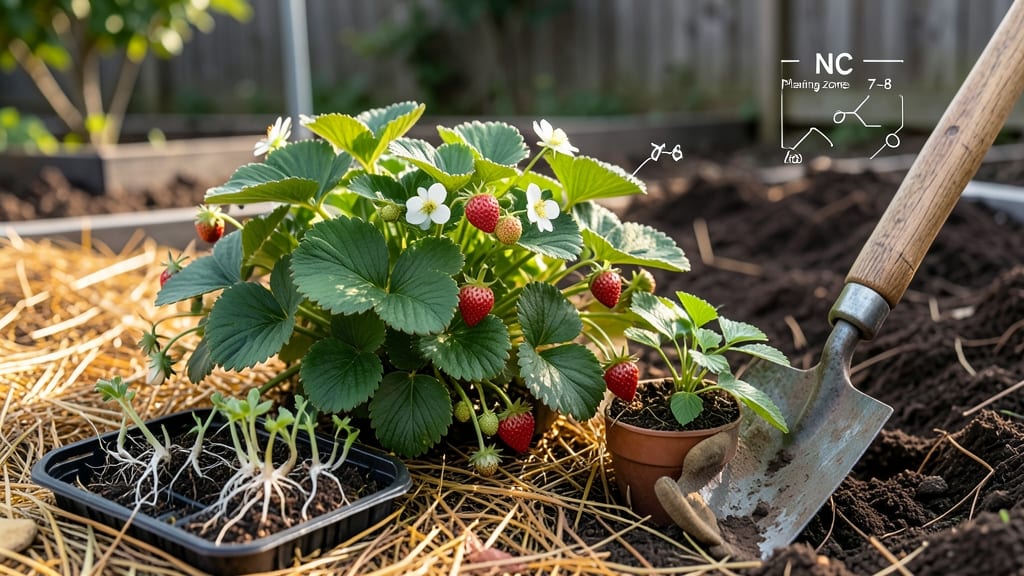
Planting strawberries in North Carolina at the wrong time can mean the difference between a bountiful harvest and a sad, frost-bitten disappointment.
The perfect window for your 🍓 patch depends on whether you're growing June-bearing, everbearing, or day-neutral varieties—and missing it could leave your plants vulnerable to winter damage or summer stress.
For most North Carolina gardeners in zones 7a-8b, the sweet spot is late winter to early spring (February-March) or early fall (September-October). These timing strategies help your plants establish strong roots before extreme temperatures arrive, setting you up for that first ripe berry in May or June.
But here's the catch: not all planting methods work the same way. Bare-root plants need different care than potted varieties, and your local microclimate (whether you're in the Piedmont or Coastal Plain) can shift those ideal dates by weeks.
Let me walk you through exactly when to plant each type—and how to protect your investment from North Carolina's unpredictable weather.
You'll discover the exact months that work best for your specific strawberry type, plus soil prep secrets and post-planting care that keeps your 🍓 bushes thriving through harvest season. Let's get those berries growing the right way!
North Carolina strawberry planting calendar: exact months by variety type
North Carolina's USDA zones 7a-8b create a unique challenge for strawberry growers—too early, and your plants face late spring frosts; too late, and summer heat stresses them before fruiting.
The key is matching your variety type with the right planting window, whether you're growing June-bearing, everbearing, or day-neutral strawberries.
For June-bearing varieties (like 'Chandler'), the fall planting window (September-October) is ideal—they need 6-8 weeks to establish roots before winter dormancy. Spring planting (February-March) works too, but requires frost protection until April.
Everbearing types (like 'Seascape') are more flexible, thriving with spring or fall plantings, while day-neutral varieties (like 'Albion') can handle both seasons with minimal stress.
Here’s the exact planting schedule tailored to North Carolina’s climate, including soil temperature thresholds and frost risk zones:
| Variety Type | Best Planting Window | Soil Temp Threshold | Frost Risk | Notes |
|---|---|---|---|---|
| June-Bearing | Fall: Late September-October Spring: February-March |
40-50°F (4-7°C) | High (Piedmont) Moderate (Coastal Plain) |
Needs 6-8 weeks to establish roots before winter. Use row covers for spring plantings. |
| Everbearing | Fall: August-September Spring: March-April |
45-55°F (7-13°C) | Moderate (all zones) | Produces two harvests: spring and fall. More heat-tolerant than June-bearing. |
| Day-Neutral | Spring: February-April Fall: August-September |
50-60°F (10-16°C) | Low (Coastal Plain) Moderate (Mountains) |
Continuous harvest from spring to frost. Best for container gardening in hot zones. |
Bare-root plants are cheaper and hardier but must be planted immediately after purchase—their roots dry out quickly. For potted strawberries, you’ve got 2-3 extra weeks of flexibility since the roots stay moist. In zone 8b (southeastern NC), extend your fall window into early November—the milder climate delays frost.
Pro tip: Test your soil’s chilling hours (most NC varieties need 300-500 hours below 45°Fsoil thermometer to confirm temperatures hit 40°F before planting fall varieties. If you’re in the Mountains (zone 6b-7a), plant 2-3 weeks earlier to avoid late frosts.
After planting, mulch heavily with straw to insulate roots—this is non-negotiable in North Carolina’s freeze-thaw cycles. For spring plantings, use black plastic mulch to warm the soil faster and speed up fruiting.
Your goal? Get those roots established before April 15, when late frosts still lurk in the Piedmont.
Remember: The Coastal Plain (zones 8a-8b) has a longer growing season, so you can push fall plantings into early October without frost risk. But in the Mountains (zones 6b-7a), stick to September to avoid winter damage.
Timing is everything—get it right, and you’ll be feasting on homegrown strawberries by May or June!
5 Critical factors that determine your strawberry planting success in NC
Planting strawberries in North Carolina isn't just about picking a month—it's about understanding five critical factors that can make or break your harvest. From soil pH to microclimates, each plays a role in whether your 🍓 plants thrive or struggle. Let me break down what truly matters beyond the calendar.
First, soil pH is your foundation. Strawberries crave slightly acidic soil between 5.5 and 6.5.
Test your garden soil before planting—if it's off, amend it with sulfur or lime. NC's Piedmont region often has clay-heavy soil that needs compost to improve drainage, while Coastal Plain areas may need sandier mixes for better aeration.
Next, mulching strategy protects your plants from extreme temperatures. Straw mulch insulates roots in winter and keeps soil cool in summer, while black plastic warms soil faster—ideal for early spring plantings. In zone 8a, where winters are milder, plastic mulch can give you a head start on growth.
Don't overlook chilling hours, which vary by variety. June-bearing types need 500-1,000 hours below 45°F to fruit well, while day-neutral varieties adapt better to NC's warmer winters. If you're in zone 7a, choose varieties like 'Chandler' that tolerate fewer chilling hours.
Your planting method also matters—bare-root plants need immediate watering, while potted varieties can wait a few days. Containers are great for urban gardeners, but in-ground plantings in well-draining soil produce bigger yields. Just avoid planting too deep, or you'll smother the crown.
Finally, microclimates shift planting windows by weeks. The Coastal Plain has milder winters, so you can plant as late as November, while the Mountains (zone 6b) need to plant by October 1st to avoid winter kill. Check your local NC State Extension frost dates!
- 1. Soil pH (5.5-6.5): Test and amend clay-heavy Piedmont soil or sandy Coastal Plain mixes.
- 2. Mulching: Straw for insulation, black plastic for heat—choose based on your zone (7a-8a).
- 3. Chilling Hours: June-bearing needs 500-1,000 hrs <45°F; day-neutral adapts to warmer winters.
- 4. Planting Method: Bare-root = immediate water; potted = wait 2-3 days; never plant crowns deep.
- 5. Microclimates: Coastal Plain = plant until Nov; Mountains = plant by Oct 1st to avoid frost.
Master these factors, and you'll turn North Carolina's unpredictable weather into an advantage. Whether you're battling late spring frosts in the Piedmont or humid summers in the Coastal Plain, these strategies keep your strawberries on track for a June harvest you'll be proud of.
Next, let's dive into the best strawberry varieties for NC's climate—some handle heat like champs, while others resist disease better. Which one will work best in your garden? 🍓