
Plants
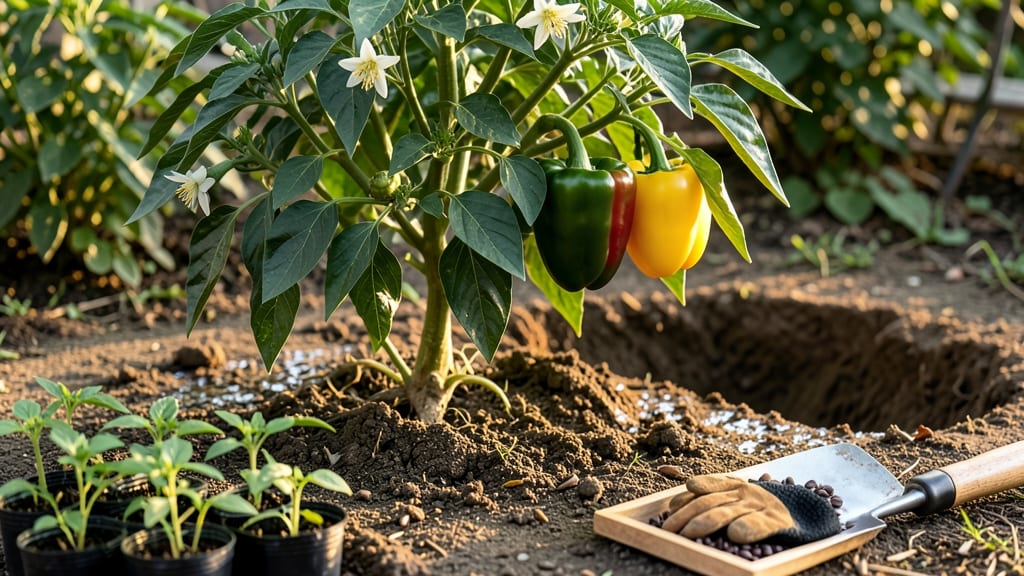
Planting bell peppers 🌶️ in Virginia at the wrong time can turn your dream harvest into a sad, wilted disappointment—but getting the timing right means juicy, vibrant peppers all summer long.
The key isn’t just waiting for spring; it’s knowing when the soil warms enough to support those tender seedlings, and avoiding those sneaky late frosts that can sneak in even after the calendar says "spring."
Most Virginia gardeners start seeds indoors by early March, but rushing them outside too soon is a common mistake. Your bell peppers need consistent warmth—soil temperatures should stay above 60°F before transplanting, and nighttime temps should reliably stay above 55°F.
In zones like 6a, that usually means waiting until mid-May, while gardeners in 8a can push it to early April.
Here’s the game-changer: even if your neighbors are already planting, don’t rush—late frosts in April can still damage young plants.
I’ll show you exactly how to time your plantings for maximum success, whether you’re starting seeds or buying transplants, so you can enjoy fresh peppers from July through October without the guesswork.
Ready to grow a thriving bell pepper patch? Let’s break down the perfect planting schedule for your Virginia zone, including soil prep tips and how to protect your plants from unexpected chilly spells. Your harvest is closer than you think!
Virginia bell pepper planting dates by region: frost-free zones & last frost timing
Virginia’s diverse climate—spanning USDA zones 5a through 8a—means your bell pepper planting timeline depends heavily on where you live. Northern regions like Roanoke (Zone 6a) face late frosts until mid-April, while southern areas like Richmond (Zone 7b) can safely plant by early March.
Even within zones, microclimates (like urban heat islands) can shift your window by 2-3 weeks.
For direct sowing (planting seeds outdoors), wait until soil temperatures hit 60°F+—typically late May in cooler zones. But most Virginia gardeners prefer transplanting seedlings after the last frost, which gives you a 4-6 week head start indoors.
Start seeds 8-10 weeks before your average last frost date to ensure robust plants ready for mid-April to early June transplanting.
Here’s how to pinpoint your exact window using Virginia’s frost-free zones:
| Region | USDA Zone | Avg. Last Frost | Transplant Window | Direct Sow Window |
|---|---|---|---|---|
| Northern VA (e.g., Winchester) | 5a-6a | Mid-April | May 15–June 1 | June 1–July 1 |
| Central VA (e.g., Charlottesville) | 7a | Early April | April 15–May 15 | May 15–June 15 |
| Southeastern VA (e.g., Norfolk) | 8a | Late March | March 20–April 30 | April 15–May 15 |
| Southwest VA (e.g., Bristol) | 6b-7a | Early April | April 1–May 10 | May 1–June 1 |
*Adjust dates 1–2 weeks earlier for urban areas or microclimates with warmer springs.
Use the Virginia Cooperative Extension’s frost date maps for your exact location—these tools account for 10-year averages and local variations. For example, Alexandria (Zone 7b) might see its last frost 2 weeks earlier than nearby Leesburg (Zone 7a) due to the Potomac River’s heat retention.
Pro tip: Sign up for local weather alerts to avoid late frosts that can kill tender seedlings overnight.
If you’re in Zone 5a (e.g., Shenandoah Valley), consider staggered planting: Start a second batch of seeds in early July for a fall harvest before the first frost hits in mid-October.
This works because bell peppers need 70–90 days to mature, and late plantings can still produce peppers before cold snaps arrive.
For container gardening in Virginia, transplant seedlings 1–2 weeks later than ground planting—pots warm up 5–10°F faster in spring sun, which can trick seedlings into thinking it’s safe to grow when frost risk remains. Always check your soil temperature with a thermometer (not just air temp) to avoid false starts.
One common mistake? Planting too early based on air temperature alone. Soil stays 10–15°F cooler than the air, and bell peppers won’t germinate below 50°F. Use a soil thermometer for 3 consecutive days at 60°F+ before committing to direct sowing.
In Zone 6a, this often means waiting until late May.
For urban gardeners in cities like Richmond or Norfolk, leverage heat islands to your advantage: South-facing walls or black containers absorb heat and can extend your planting window by 1–2 weeks.
Pair this with row covers for early starts, and you might harvest green peppers by July—even in cooler microclimates.
Remember: Bell peppers hate cold feet. Even a single 32°F night can stunt growth or kill seedlings. Use frost cloth or a mini greenhouse for the first 2 weeks after transplanting to give them a fighting chance against Virginia’s unpredictable spring.
Optimal soil temperature & hardening off bell pepper seedlings before transplanting
Bell pepper seedlings are frost-sensitive, so planting them too early in Virginia’s unpredictable spring can mean disaster. The key to success is waiting until the soil temperature consistently stays above 60°F—this ensures strong root development and prevents stunted growth.
In my garden, I’ve learned that rushing seedlings into cold soil leads to yellowing leaves and poor yields, even if the air feels warm.
Most Virginia gardeners start seeds indoors by early March, but don’t transplant them outside until late April or early May, depending on your USDA zone.
For example, in Zone 6a (like Roanoke), aim for May 1-15, while Zone 8a (like Norfolk) can start as early as April 15. Always check your local last frost date—even if the calendar says spring, late frosts can still sneak in.
Before transplanting, your seedlings need a hardening-off period of 7-10 days. This gradual adjustment to outdoor conditions prevents shock. Start by placing them outside in a shaded, sheltered spot for a few hours, then slowly increase their exposure to sun and wind.
I like to use a cloche or row cover during this time to protect them from sudden temperature drops.
Soil temperature is more critical than air temperature—peppers won’t thrive if the soil is too cool. Use a soil thermometer to check the temperature at a depth of 2-3 inches. If it’s below 65°F, wait a few more days. In my experience, black plastic mulch can warm the soil faster, giving you a head start if you’re in a cooler zone.
- 🌡️ Soil temp must be 60°F+ for germination, 65°F+ for transplanting.
- 📅 Transplant 2-3 weeks after last frost—check your local averages.
- 🌿 Harden off seedlings for 7-10 days before planting.
- ☀️ Plant in full sun (6+ hours daily) with well-draining soil.
- 💧 Water deeply after transplanting to reduce shock.
Avoid the common mistake of transplanting when the air feels warm but the soil is still cold. I’ve seen gardeners in Zone 7a (like Richmond) lose entire crops by planting too early.
If you’re unsure, err on the side of caution—peppers planted in warm soil will bolt to flower faster, leading to earlier (and often smaller) harvests.
Once your seedlings are hardened off and the soil is warm, transplant them on a cloudy day to reduce stress. Space them 18-24 inches apart in rows 2 feet apart to allow airflow and prevent disease.
After planting, water deeply and mulch with straw or grass clippings to retain moisture and regulate soil temperature. With the right timing and care, your bell peppers will thrive all summer long!