
Plants
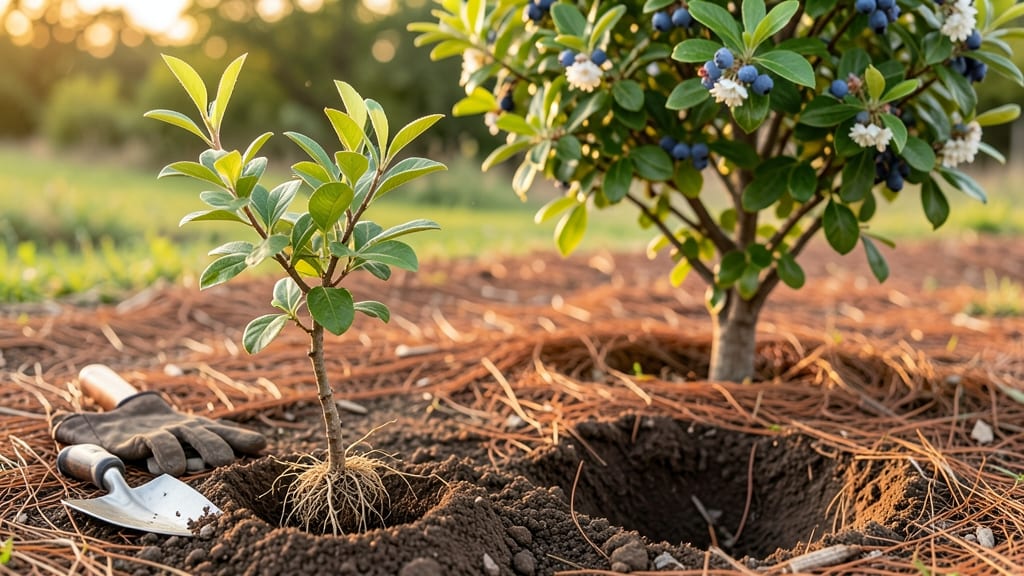
Planting your 🫐 blueberry bush at the wrong time in North Carolina can mean waiting years for that first sweet harvest—or worse, losing your investment entirely. The difference between success and disappointment often comes down to understanding when to plant, not just how.
North Carolina’s varied climate—from the cooler mountains to the warmer coastal plains—creates a 60-day window for ideal planting, but timing matters more than most gardeners realize.
Whether you’re working with bare-root saplings or container-grown bushes, getting them in the ground at the right moment ensures strong root establishment before summer heat or winter frost sets in.
In this guide, I’ll break down the exact months to plant in your specific NC region, how chill-hour requirements affect your variety choices, and the simple soil prep tricks that make all the difference.
Skip the guesswork and start with the knowledge that leads to bountiful harvests every May through July.
Ready to turn your backyard into a blueberry powerhouse? Let’s get those bushes in the ground the right way—starting with the perfect planting window for your NC zone.
Best planting windows in NC: month-by-month guide for blueberry bushes
North Carolina’s three distinct climate zones—Coastal Plain, Piedmont, and Mountains—each demand slightly different planting timelines for blueberry bushes. The ideal window spans from late winter to early spring, but exact dates depend on your last frost date and chill-hour requirements.
For most of NC, this means February through April, with March and early April being the sweet spot.
In the Coastal Plain (Zone 8a-8b), where winters are milder, you can plant as late as mid-April without risking frost damage. Meanwhile, gardeners in the Mountains (Zone 6a-7a) should aim for late February to early March to avoid late spring frosts that can stunt young bushes.
The Piedmont region (Zone 7a-7b) falls somewhere in between, with March being the safest month.
Here’s the month-by-month breakdown for planting blueberry bushes in NC, including key tasks to prepare your soil and plants for success.
NC Planting Timeline for Blueberry Bushes
| Month | Best Planting Time | Soil Prep | Planting Tip | Climate Note |
|---|---|---|---|---|
| February | Mountains only (Zone 6a-7a) | Test pH (4.5-5.5), amend with peat moss | Plant bare-root bushes | Coldest month; avoid Coastal Plain |
| March | Piedmont & Mountains (ideal for all) | Add compost, mulch heavily | Best time for container plants | Moderate temps, minimal frost risk |
| April | Coastal Plain & Piedmont | Re-test pH if amended earlier | Avoid if late frosts predicted | Warmer; watch for heat stress |
| May | Emergency planting only | Keep soil moist, shade young plants | Not recommended; high stress risk | Heat and drought stress likely |
For bare-root blueberry bushes, which are most commonly sold, the dormant season (late winter to early spring) is critical. These plants enter the ground with minimal foliage, allowing their roots to establish before the active growing season begins.
If you’re planting container-grown bushes, you have slightly more flexibility—you can plant them up to May, but they’ll need extra care to recover from transplant shock in hot weather.
One of the biggest mistakes I see in NC gardens is planting blueberries in fall. While some shrubs thrive with fall planting, blueberries need time to establish roots before winter dormancy.
A fall-planted bush may not survive the first freeze, especially in the Mountains or Piedmont. If you miss the spring window, wait until the following February or March.
Before planting, always prepare your soil. Blueberries are acid-loving plants that require a pH between 4.5 and 5.5. If your soil is too alkaline, amend it with peat moss, pine needles, or sulfur at least 2-3 months before planting.
In NC’s Coastal Plain, where soil is often sandy, you may need to re-test pH annually and re-amend as needed.
Once planted, mulch heavily with pine bark or wood chips to maintain soil acidity and retain moisture. In the first year, focus on watering deeply (1-2 gallons per plant) and avoiding fertilizer, which can stress young roots.
By next spring, your blueberry bushes will be ready to thrive and produce fruit.
If you’re in Zone 8b (Coastal NC), consider low-chill varieties like ‘Climax’ or ‘Premier’ to avoid winter damage. In contrast, Mountain gardeners (Zone 6a-7a) can plant traditional varieties like ‘Tifblue’ or ‘Duke’ without worrying about insufficient chill hours.
🌱
Chill-hour requirements by blueberry variety: NC’s top picks for sweet harvests
North Carolina’s diverse climate means your blueberry variety choice hinges on chill-hour needs. Southern-highbush varieties thrive in the Coastal Plain with 300-500 chill hours, while rabbiteye types need 500-900 chill hours for the Piedmont and Mountains.
Picking the wrong variety can leave you with fewer berries or none at all.
For example, the ‘Climax’ Southern-highbush variety—perfect for Raleigh or Wilmington—produces large, sweet berries with just 400 chill hours. Meanwhile, the ‘Tifblue’ rabbiteye variety, ideal for the Asheville area, requires 700 chill hours to set fruit. Let’s break down the best options for your NC region.
| Variety Type | Chill-Hour Needs | Best NC Regions | Heat Tolerance |
|---|---|---|---|
| Southern-Highbush | 300-500 hrs | Coastal Plain, Piedmont | High |
| RabbitEye | 500-900 hrs | Piedmont, Mountains | Moderate |
| Half-High | 400-600 hrs | Coastal to Piedmont | High |
If you’re in a transitional zone like the Triangle or Charlotte, consider low-chill varieties like ‘Peach Sorbet’ (300 chill hours) or ‘Reveille’ (400 chill hours).
These adapt better to warmer winters while still producing abundant fruit. For cooler mountain regions, ‘Tifblue’ or ‘Premier’ (both 700+ chill hours) are top performers.
Pro tip: Check your local NC State Extension office for precise chill-hour data in your area. Even a 100-mile difference can shift your variety needs significantly. For example, Asheville’s chill hours (800+) support rabbiteye varieties, while Wilmington’s (400-500) leans toward Southern-highbush types.
Once you’ve matched your variety to your chill-hour zone, focus on soil prep and planting timing to maximize root growth. The best window for planting these varieties is still late winter to early spring, but your chill-hour needs determine which types will thrive in your yard.
With the right variety in the right spot, you’ll be picking juicy, homegrown blueberries by next summer—no waiting years for that first harvest! 🫐