
Plants
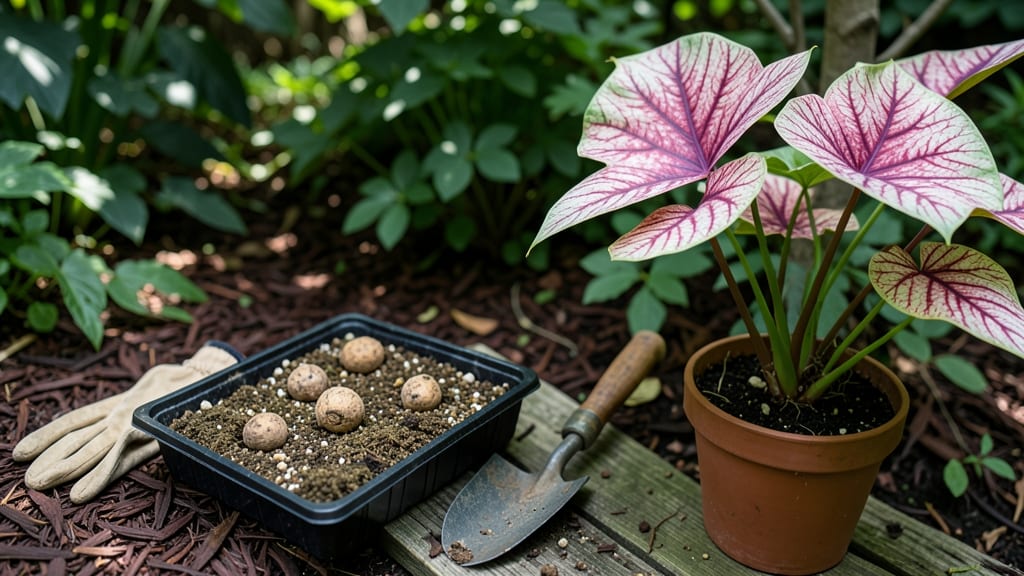
Planting caladiums in Texas isn't just about waiting for spring—it's about timing them perfectly to beat the heat and avoid frost surprises. These stunning 🌿 tubers demand warmth, but rushing them too early can turn your garden into a soggy mess.
The key is knowing exactly when soil temperatures hit that sweet spot of 60°F and all frost risk has vanished.
For most of Texas, that means waiting until late March or early April in North Texas (Zone 8a) or even February in South Texas (Zones 10a-11). But here's the catch: Houston gardeners have a tighter window than Dallas, and El Paso's high desert climate plays by its own rules.
Skipping this step means risking rot from cool soil or stunted growth from premature planting.
I've learned the hard way that caladiums aren't your average shade-loving plants—they crave heat but hate wilting. The solution? Plant after your last frost date (check your local USDA Zone for exact timing) and prepare your soil with rich organic matter to lock in moisture.
This isn't just about pretty leaves—it's about giving your caladiums the Texas-sized growing season they deserve.
Ready to transform your garden with bold foliage that thrives in our brutal summers? Let's break down the exact months, heat-resistant varieties, and pro tips to make your caladiums the star of your shade garden—without the guesswork. Your plants (and your patience) will thank you.
Best planting months for caladiums in Texas Zones (with exact dates)
Caladiums love Texas heat—but only if you plant them at the right time. Unlike frost-sensitive bulbs, these heat-loving tubers need warm soil (60°F+) and no frost risk. In most of Texas, that means waiting until late March to May, depending on your zone.
Planting too early risks rot from lingering cold, while waiting too long means missing peak foliage display.
Texas spans USDA Zones 7a-11, so timing varies wildly. North Texas (e.g., Dallas, Lubbock) has later last-frost dates (March 15-April 1) than South Texas (Houston, San Antonio: February 15-March 1).
Even within a city, microclimates matter—urban areas warm faster than rural spots. Always check your local frost-free date (use the Texas A&M AgriLife Extension calculator) before digging in.
Here’s the golden rule: Plant caladiums after your area’s last frost date and when soil stays above 60°F for 5+ days. In Zone 8a (North Texas), aim for mid-April.
In Zone 9a-10a (Central/South Texas), you can start as early as late February. El Paso’s Zone 7b gardeners should wait until mid-May to avoid late spring freezes.
Pro tip: Use a soil thermometer to confirm warmth. Stick it 2 inches deep—if it reads below 60°F, wait another week. Cold soil = slow growth or rot.
And remember, caladiums are tropical tubers—they hate Texas’s freezing winters, so treat them as annuals unless you dig them up before frost.
🌱
| Texas Region | USDA Zone | Last Frost Date | Ideal Planting Window | Soil Temp Threshold |
|---|---|---|---|---|
| North Texas (Dallas, Lubbock, Amarillo) | 7b-8a | March 15 - April 1 | Mid-April to early May | 60°F+ (consistent) |
| Central Texas (Austin, San Antonio) | 8a-8b | February 28 - March 15 | Late March to April | 60°F+ (consistent) |
| East Texas (Tyler, Beaumont) | 8a-9a | February 15 - March 1 | Early March to late April | 60°F+ (consistent) |
| South Texas (Houston, Corpus Christi) | 9a-10a | January 15 - February 15 | Late February to early April | 60°F+ (consistent) |
| West Texas (El Paso, Midland) | 7b-8a | March 1 - April 1 | Mid-April to May | 60°F+ (consistent) |
If you’re in Houston or San Antonio, don’t wait past early April—caladiums planted later may struggle to establish roots before summer’s brutal heat sets in. For Dallas or Lubbock, push to plant by May 1 to avoid missing the growing season entirely.
And if you’re in El Paso, treat caladiums like a short-season annual—plant in May and enjoy them until the first frost in November.
For container gardeners, you’ve got a little more flexibility. Potted caladiums can go in 2-4 weeks earlier than in-ground plants because containers warm up faster. Just move them indoors or to a covered patio if nights dip below 50°F.
And if you’re in Zone 10b+ (Deep South Texas), you can even plant year-round, though they’ll need extra shade in peak summer.
One more Texas-specific tip: Mulch heavily after planting to keep soil temps stable. Use 2-3 inches of shredded bark or pine straw—this helps retain moisture and insulates roots during our swinging spring temps. Skip the mulch, and you risk temperature shock or root rot from alternating hot/cold snaps.
💧
Ready to plant? Grab your caladium tubers, a trowel, and check the forecast for 3+ days of warm, dry weather. Wet soil compacts easily, making it harder for tubers to root.
And if you’re unsure about your last frost date, err on the side of waiting—caladiums are forgiving once established, but cold soil will kill them.
Critical mistakes to avoid when planting caladiums in Texas (and how to fix them)
I've made my share of caladium planting mistakes in Texas heat—like rushing tubers into cold soil or drowning them with too much water. The biggest mistake?
Ignoring soil temperature and frost risk. Caladiums rot faster than a Texas summer melts ice cream if planted before the ground hits 60°F.
Another common error is choosing full-sun locations. These tropical beauties love shade but hate afternoon sun. Planting them in direct sunlight turns their leaves into crispy fried chips instead of lush foliage. Always pick spots with morning sun only.
Here’s the fix: Test your soil with a soil thermometer before planting. If it’s below 60°F, wait. For shade, aim for 4-6 hours of morning sun under trees or near north-facing walls. Mulch heavily with 3-4 inches of organic mulch to keep roots cool.
⚠️ DON’T MAKE THESE MISTAKES
- Planting too early: Soil below 60°F causes rot. Fix: Wait until after last frost (check your USDA Zone).
- Overwatering: Soggy soil = mushy tubers. Fix: Water deeply but only when top inch is dry.
- Full-sun exposure: Leaves scorch like burnt toast. Fix: Use partial shade (east-facing spots).
- Skipping mulch: Roots dry out fast. Fix: Add 3-4 inches of mulch to retain moisture.
Pro Tip: Divide tubers every 2-3 years to prevent overcrowding and disease.
One more pitfall? Using poor-draining soil. Caladiums hate soggy feet. Amend clay soil with compost or peat moss to improve drainage. If your garden stays wet, plant in containers with drainage holes instead.
Finally, don’t forget to fertilize lightly after planting. Too much nitrogen burns roots. Stick to a balanced 10-10-10 fertilizer every 6 weeks during the growing season. Overfeeding is just as bad as underfeeding!
By avoiding these mistakes, your caladiums will reward you with bold, heat-resistant foliage all summer long—no wilting in sight. Now go enjoy that shade garden you’ve been dreaming of! 🌿