
Plants
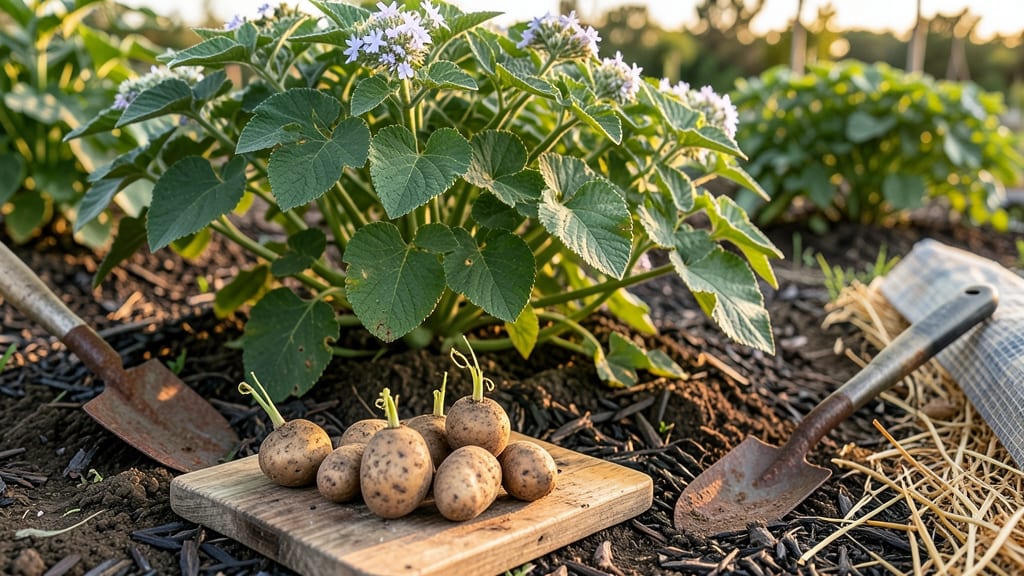
Planting fall potatoes in Zone 8 at the wrong time means either battling blight or watching your harvest shrink before frost—neither of which you want.
The key to success lies in timing it just right, when soil temps are cool but still warm enough to encourage strong root growth before the chill sets in.
For Zone 8 gardeners, the ideal window opens in late August and closes by early September, giving your 🥔 tubers 90-120 days to mature before the first frost. But here’s the catch: coastal areas may stretch this window later than inland spots, where nights cool faster.
We’ll break down exactly how to adjust your schedule based on your microclimate.
Why does this matter? Because planting too early risks disease, while waiting too long leaves your potatoes stunted and vulnerable to cold. I’ll show you how to read your local frost dates, pick the best varieties for Zone 8, and even use companion planting to protect your crop from pests.
Ready to avoid the most common mistakes? Let’s dive into the exact weeks before frost that’ll guarantee a bountiful harvest—no guesswork required.
Zone 8 fall potato planting schedule: exact weeks before frost for success
Planting fall potatoes in Zone 8 requires precision—you need to time it so tubers mature before the first frost (typically around January 15 in most areas). The ideal window is 4-6 weeks before frost, which for Zone 8 usually means planting between mid-August and early September.
This schedule balances tuber development with cooler temperatures, reducing blight risks while ensuring a harvest before winter sets in.
Your exact planting date depends on your local last frost date and variety maturity. Early varieties (like Yukon Gold) can go in as early as late July, while late varieties (like Purple Viking) need to be planted by mid-September to avoid frost damage.
Always check your microclimate—coastal areas may have later frosts than inland zones.
Here’s the science behind the timing: Potatoes need 90-120 days to mature, and soil temperatures should stay above 45°F (7°C) for optimal growth. Planting too early in Zone 8 risks late blight (common in humid summers), while planting too late may leave tubers underdeveloped by frost.
🌱
| Stage | Action | Zone 8 Timeline |
|---|---|---|
| Soil Prep | Test pH (5.0-6.5), add compost | July-August |
| Planting | 4-6 weeks before frost | Mid-August to early Sept |
| Hilling | Every 2-3 weeks until frost | August-October |
| Harvest | Before foliage dies | Late Oct-Dec |
| 💡 PRO TIP: Use a planting calendar for your exact city—frost dates vary by 1-2 weeks even within Zone 8. | ||
To maximize your harvest, aim for a two-week planting window in late summer. For example, if your first frost is January 15, plant your earliest varieties by September 1 and later ones by September 15.
This staggered approach ensures a continuous supply of tubers and reduces the risk of losing an entire crop to unexpected cold snaps.
Coastal Zone 8 gardeners often have a 2-3 week later frost date than inland areas, so adjust accordingly. For instance, if you’re near the California coast, you might plant as late as early October.
Always monitor weekly forecasts and have row covers ready to extend the season if needed.
One common mistake is planting too close to frost. If you’re unsure, use the "50-day rule": Count back 50 days from your average frost date.
This works for most mid-season varieties and gives you a buffer for cooler-than-average falls. For early varieties, you can push this to 60 days.
🌿
After planting, focus on consistent moisture and hilling (piling soil around stems) to protect tubers from light exposure (which turns them green and toxic). Mulch with straw or leaves to insulate soil and retain warmth.
If temperatures drop unexpectedly, use frost blankets to shield plants, especially in elevated or windy areas where cold settles faster.
Finally, plan your harvest around foliage dieback. Potatoes are ready when tops yellow and die, but don’t wait too long—tubers left in the ground too long can sprout or rot. Cure harvested potatoes in a cool, dark place for 1-2 weeks to thicken skins and improve storage life.
With the right timing, you’ll enjoy homegrown spuds straight from your Zone 8 garden through winter!
5 Critical factors that determine your planting window (and how to adjust)
Your Zone 8 fall potato planting schedule isn’t one-size-fits-all—it depends on 5 key factors that shift your ideal window by weeks. The first is altitude: Higher elevations (like mountainous areas) experience earlier frosts, so plant 2-3 weeks earlier than coastal zones.
For example, if you’re at 2,000 feet, aim for late July planting instead of August.
Next, consider your soil type. Sandy soils warm faster but drain too quickly, while clay holds moisture but stays cold longer. Amend clay with compost or sand to hit the 50-60°F (10-15°C) soil temp threshold potatoes need to sprout.
Use a soil thermometer—planting when soil temps drop below 45°F (7°C) stunts growth.
🌱
- 📍 Altitude: Subtract 1 week per 500ft above sea level. Example: 3,000ft = plant by late July.
- 🌡️ Soil Temp: Wait until soil hits 50°F (10°C) at 6-inch depth. Use a thermometer!
- 🥔 Variety: Early types (e.g., Red Norland) need 90 days; late types (e.g., Russian Banana) need 120 days.
- 🌬️ Microclimate: Coastal areas plant 2-3 weeks later than inland. Check local frost maps.
- 💧 Moisture: Delay planting if soil is waterlogged—wait for 2-3 dry days after rain to avoid rot.
The potato variety you choose directly impacts your planting window. Early varieties like Yukon Gold (90 days) can go in as early as late July, while late varieties like Purple Viking (120 days) must be planted by mid-September to mature before frost.
Pro tip: Mix 3 varieties with staggered maturity dates for a continuous harvest.
Your local frost patterns are the final puzzle piece. While Zone 8’s average first frost is January 15, some years bring early cold snaps. Use the Almanac’s frost calculator for your ZIP code—it accounts for 10-year averages and microclimates.
For example, San Diego (Zone 8a) might have frost in December, while Phoenix (Zone 9a) rarely sees frost.
Finally, troubleshoot delays like wet soil or slow sprouting. If your seeds aren’t sprouting within 10-14 days, check for rot (too wet) or drought stress (too dry). Pre-sprout seeds indoors in moist peat moss for 2 weeks before transplanting to jumpstart growth in cooler soils.
🌿 Adjust these factors, and you’ll nail your Zone 8 fall potato planting window—no more guesswork, just bountiful harvests!